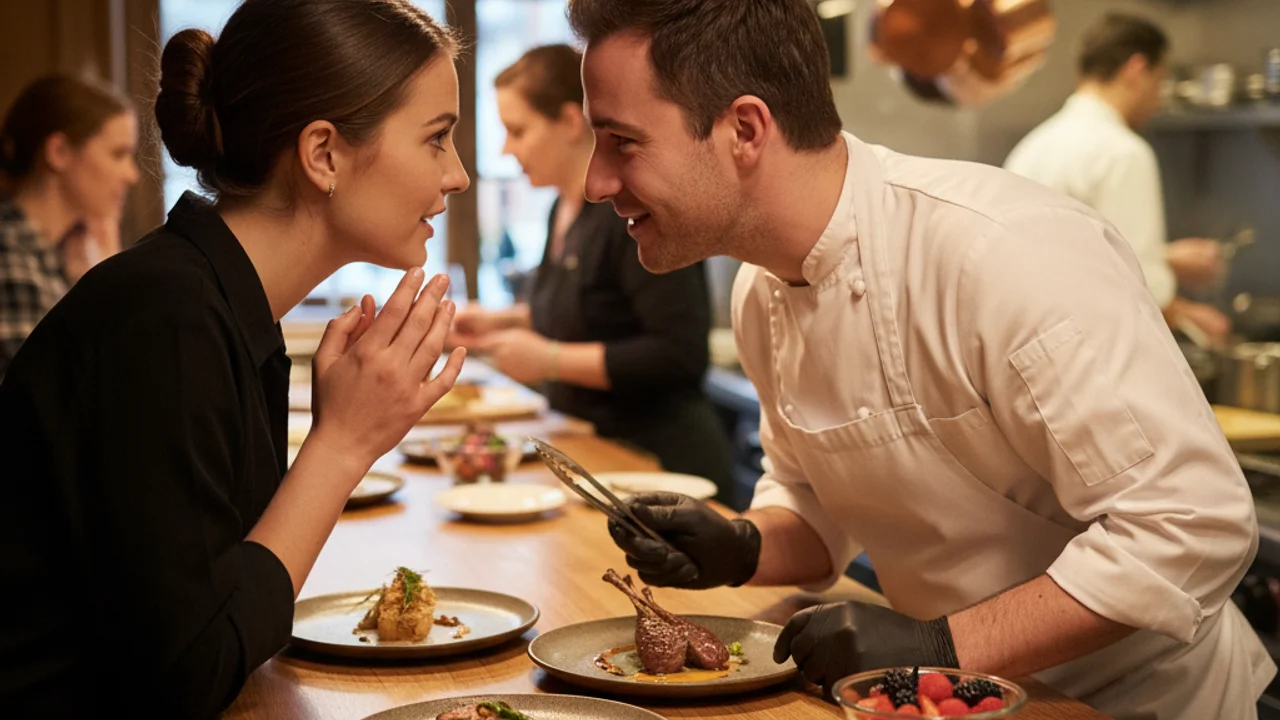
Omakase counter etiquette is not a list of prohibitions. It is a set of practices that protect the experience: yours, the chef's, and everyone else's at the counter. Each of these ten rules makes the evening better for the whole room.
Rules 1 to 3: Arrival and setup
1. Arrive on time, or call if you will be late. At most omakase counters, the chef begins the sequence for all guests simultaneously. A late arrival forces the entire table to wait, and puts the chef in an impossible position. If you know you will be more than five minutes late, call ahead. A small counter is a tight operation.
2. Mention every allergy and restriction at booking, not on arrival. Certain preparations, marinades, cured elements, and mise-en-place components are completed hours before service. Information given at the door can be too late to act on properly. Say more than you think necessary at booking: the chef would rather adjust in advance than improvise at the last moment.
3. Skip heavy perfume or cologne. This is the rule most often underestimated. In a four-seat room, a strong fragrance spreads within seconds. It interferes with the delicate aromas of raw fish, seasoned rice, and subtle garnishes. Other guests are affected as much as you benefit. Unscented lotion or no fragrance at all is the standard at a serious counter.
Rules 4 to 6: At the counter, with each piece
4. Eat each piece within a minute of it being placed in front of you. Nigiri is pressed so that the rice is warm and the fish sits at room temperature: that balance lasts two to three minutes at most. After that, the rice cools, the nori softens, and the texture the chef built into the piece begins to collapse. A piece left to wait while you finish a conversation is a piece eaten at a fraction of its potential.
5. Taste before you season. The chef has already seasoned the piece: a brush of nikiri, sometimes a touch of finishing salt, sometimes a small emulsion. Taste it as it arrives. If you want additional seasoning after tasting, ask quietly. Reaching for the soy sauce before the first bite is a signal to the chef that his judgment is not trusted, which runs directly against the spirit of omakase.
6. Take one photo, then eat. A quick photo is acceptable and understandable. What damages the experience is spending two minutes searching for the right angle, letting the piece cool, asking the chef to wait, or disturbing the neighbours. One frame, fast, then eat the piece while it is at its best.
How to Eat Sushi: The BasicsChopsticks or fingers, soy sauce, ginger: the foundational gestures explained.Rules 7 to 9: Presence and dialogue
7. Engage the chef between pieces. The counter was designed for proximity. Use it. Ask where the tuna came from, why this fish over another tonight, what makes this particular cut worth featuring. These questions do not interrupt: they complete the meal. The rule is one of timing, between pieces, not during a cut or an assembly.
8. Put your phone away. Not because it is written somewhere, but because you are missing something extraordinary when your eyes are in your screen. The chef is working two feet away from you, in plain sight, with full concentration. Watch the work. An omakase counter with four seats is one of the most direct culinary experiences available anywhere. Experiencing it through a phone screen is choosing the lesser thing.
9. Do not rush the pace. If you have another commitment after dinner, say so at booking: the chef can adjust the rhythm. But do not signal impatience during the meal, verbally or through restlessness. The pace of omakase belongs to the chef, and it is exactly what you came for.
Why should you mention dietary restrictions at booking rather than at arrival?
Rule 10: The close of the evening
10. Tip appropriately and say thank you directly. In Montréal, 15 to 20 percent is appropriate at this level. At a small counter where the chef is also running the experience, the gesture acknowledges both the service and the craft behind it. Before you leave, say something to the chef personally. A brief, specific word about what stood out carries more weight than a generic compliment. The chef has invested the better part of the day in the meal you just experienced, and genuine, direct feedback is rarer and more valued than most guests realise.
What Is Omakase? Everything You Need to KnowThe full explanation of the format: how a session works, what it costs, and what to expect.Kaiseki vs. Omakase: Two Philosophies of Japanese DiningKaiseki is a formal multi-course meal rooted in Kyoto's tea ceremony tradition, with a fixed sequence and elegant tableware. Omakase is a coOmakase, Reinvented: All the Pleasure, None of the Hungry WaitAt Aji, omakase is an option, not an obligation. We start as a sushi & izakaya counter (Japanese tapas), and omakase happens at the counter- 1Arrive on time: a late start disrupts the whole counter.
- 2Communicate every restriction at booking, not at the door.
- 3No heavy fragrance: it erases the aromas the chef built into the sequence.
- 4Eat each piece immediately; taste before adding any seasoning.
- 5Engage the chef between pieces; keep your phone face-down.
- 6Tip 15 to 20 percent and say thank you directly before you leave.
These ten gestures require no expertise. They require presence. And presence is exactly what an omakase counter invites you to bring.
Ready to experience the counter at Aji with confidence?
Make a reservation