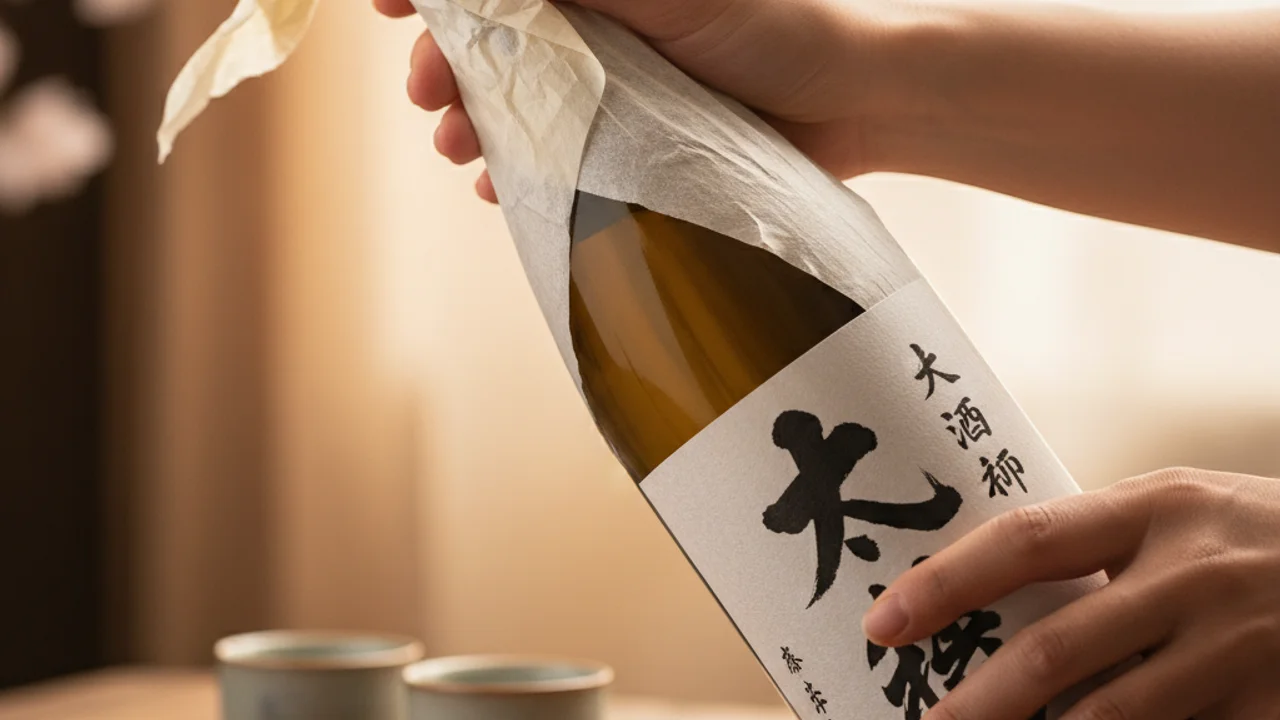
A sake list can be intimidating. Four names in Japanese, a classification system that looks like nothing familiar, and a server waiting for your answer. This guide covers what sake actually is, how it is made, and how to order without getting lost.
Sake Is Not Rice Wine
The phrase "rice wine" gets repeated often, usually for convenience. It is inaccurate. Wine is produced by fermenting fruit juice, which already contains natural sugars. Rice contains starch, not sugar. To produce alcohol from rice, starch must first be converted into fermentable sugars. That conversion requires an extra biological step that does not exist in winemaking.
The result, nihonshu in Japanese, is a drink in its own category, with its own aromatic vocabulary: white flowers, stone fruit, warm rice, umami, sometimes a faint mineral quality. Calling it rice wine is like calling beer fermented barley juice: technically defensible, but it misses everything interesting.
How Sake Is Made
Production begins with polishing the rice. The outer layers of the grain contain fats and proteins that can add unwanted heaviness to the final drink. The more the rice is polished, the more delicate and aromatic the sake tends to be. The percentage of grain remaining after polishing, called seimaibuai, is a key classification indicator.
The polished rice is steamed, then a portion is inoculated with koji mold. Koji produces enzymes that saccharify the starch, converting it into sugars. These sugars are then fermented into alcohol by yeast. What makes sake unique is that saccharification and fermentation happen simultaneously in the same vessel, a process called multiple parallel fermentation. No other major beverage is made this way.
Alcohol Content and Flavor Profiles
Most sake falls between 13% and 17% alcohol, with a typical average near 15%. Some breweries dilute before bottling, bringing a sake down to 13% or 14%. Others bottle without dilution, producing genshu sake that can reach 18% to 20%.
The flavor spectrum covers a wide range. On the fruity and floral end, ginjo and daiginjo sake deliver notes of pear, melon, lychee, or white flowers. On the savoury and earthy end, junmai sake with less-polished rice offers roundness, depth, and a natural affinity with fatty fish. Between those poles lies a broad territory: warm cashew, gentle citrus, mushroom, rice bran, fresh cream.
The nihonshudo scale measures sweetness versus dryness. A positive number indicates a drier sake, a negative number a sweeter one. In practice, simply ask whether the sake is karakuchi (dry) or amakuchi (sweet) and go from there.
Junmai, Ginjo, Daiginjo: The Types of Sake ExplainedThe full classification system with flavor expectations for each category.Vocabulary to Know
A handful of terms appear on almost every sake list. These are the ones worth knowing before you sit down.
- Nihonshu: the Japanese word for Japanese sake. More precise than "sake," which in Japanese refers to any alcoholic drink.
- Junmai: pure rice. No added alcohol, only rice, water, koji, and yeast. Tends to be fuller-bodied and savoury.
- Ginjo: rice polished to at least 60% remaining. Fruity and aromatic.
- Daiginjo: rice polished to at least 50% remaining. The most refined and delicate category.
- Honjozo: a small amount of distilled alcohol is added to lighten the body and lift aromas. Not inferior, just different.
- Genshu: undiluted, bottled at full strength. Higher alcohol, concentrated flavor.
- Nigori: unfiltered, cloudy. Creamy texture, softer and often sweeter profile.
What does seimaibuai measure in sake production?
Ordering at a Japanese Restaurant
Sake lists at Japanese restaurants often follow a progression similar to a wine list: from the lightest and most delicate to the richest and most structured. For a first order, a junmai ginjo served cold is an excellent entry point. It is aromatic without being demanding, and it pairs naturally with delicate white-fleshed fish and lighter sushi.
If you want something more neutral to accompany a full meal, a cold honjozo works well: it is clean, lively, and does not compete with the food. If you enjoy creamy textures and gentle sweetness, ask for a nigori.
One last note: premium sake does not need a small ceramic cup. Delicate ginjo and daiginjo sake actually benefit from a slightly flared white wine glass, which concentrates the aromas. The glassware choice says something about the quality of what you are being served.
Japanese Mocktails: Drinking Well Without Alcohol at AjiJapanese cuisine offers a rich palette for non-alcoholic drinks: yuzu, matcha, shiso, hojicha, and umeshu-inspired preparations all pair nat- 1Sake is a unique fermented rice beverage, not rice wine.
- 2Koji mold converts rice starch into fermentable sugar: this step has no equivalent in winemaking.
- 3Alcohol content averages around 15%, with flavors from fruity and floral to earthy and savoury.
- 4Seimaibuai, the rice-polishing ratio, is the primary classification indicator.
- 5To start, order a junmai ginjo served cold: it is versatile and honest.
Sake rewards curiosity. Every bottle tells the story of the rice chosen, the local water, the yeast, and the brewer's hand. It is a drink with a geography, a season, and a character worth exploring slowly.
Come explore our sake selection at the Aji counter, 929 Saint-Zotique Est.
Make a reservation