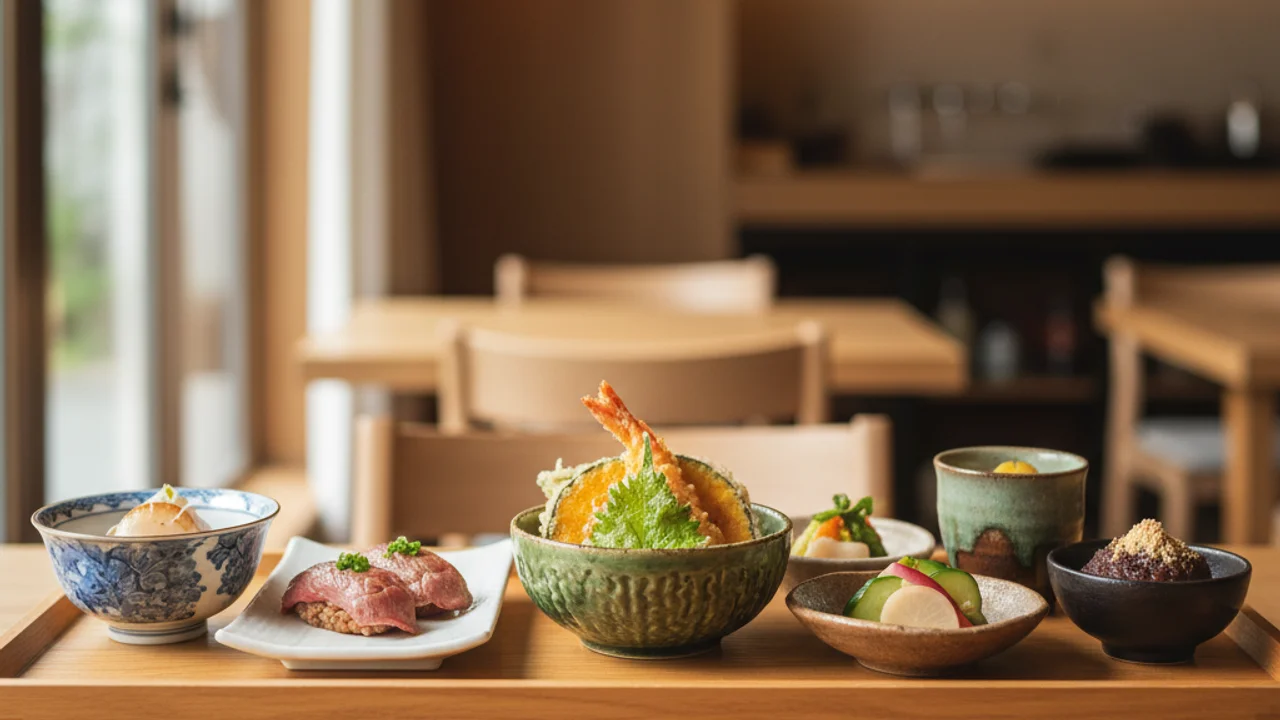
Japan has produced two of the world's most considered approaches to a tasting meal. Both are chef-driven, both honour the calendar, and both demand ingredients of exceptional quality. But kaiseki and omakase grew from different roots, serve different purposes, and create very different experiences at the table.
Kaiseki: roots in the tea ceremony
Kaiseki (懐石) originated in the ritual meal served before a formal tea ceremony in Kyoto. The word itself refers to the warm stone monks placed inside their robes to ward off hunger during long meditation sessions: a modest, grounding image that captures the original spirit of the meal. Over centuries, kaiseki evolved from a simple preceding snack into one of the most elaborate dining formats in the world.
A traditional kaiseki meal unfolds across eight to fourteen courses, each arriving in a specific order: sakizuke (an amuse-bouche), hassun (a seasonal platter establishing the meal's theme), mukozuke (a raw preparation), a simmered dish, a grilled dish, a rice course, and dessert. Every element, from the lacquerware to the placement of garnish, reflects the season with deliberate precision.
Kaiseki is served in a ryotei, a formal Japanese restaurant, often in a private dining room. Guests do not see the kitchen. The meal arrives through a choreographed service. The experience is gracious, ceremonial, and at a remove from the chef.
Omakase: the Edo counter tradition
Omakase (お任せ) has a different origin and a different energy. It emerged from the Edo period in Tokyo, where street-side sushi stalls offered fresh nigiri pressed by a single chef and eaten standing up. The transaction was direct, immediate, and personal: you watched the chef work, you ate what he prepared, you paid and left.
As sushi bars moved indoors and upmarket, the counter format remained. What changed was the depth of the experience. A guest seated at an omakase counter receives each piece directly from the chef's hands, eats it within moments of its assembly, and converses with the person who made it. The meal is composed in real time, shaped by the day's delivery, the chef's instincts, and the guests' preferences.
There is no formal course structure, no lacquerware hierarchy, no programme handed to the guest. There is a sequence, but it breathes. It can shift if the chef decides a piece needs to appear sooner or later than planned.
What Is Omakase? Everything You Need to KnowA full explanation of the format, what to expect, and how a session unfolds at Aji.How they differ: structure, setting, pace
Structure. Kaiseki follows a defined sequence of named courses, assembled by a team. Omakase has no fixed course names: the chef decides what comes next as the meal progresses.
Setting. Kaiseki is typically served in a private or semi-private dining room, with guests seated at a table, separated from the kitchen. Omakase happens at a counter, face to face with the chef.
Pacing. Kaiseki meals tend to be longer and more ceremonious, sometimes running two to three hours. Omakase moves at a brisker pace, 75 to 120 minutes, with pieces arriving in steady succession.
Interaction. At kaiseki, guests engage with servers, not chefs. At omakase, the chef is the central figure, visible, present, and available for conversation.
What they share: seasonality and respect
Despite their differences, kaiseki and omakase rest on the same foundation: an absolute respect for the season and for the ingredients it produces. In both formats, the chef's role is to step back and let the produce speak. Unnecessary elaboration is a failure of judgment.
Both formats also share a commitment to the guest's experience over the chef's ego. The meal is not about what the chef wants to cook. It is about what this moment, this season, and these ingredients ask for.
Where did the omakase counter format originate?
Which experience suits which occasion
Choose kaiseki when ceremony and ritual are what you are after: a milestone anniversary, a formal business dinner, an experience where the structure of the meal is part of the gift. It is best approached with some familiarity with Japanese cuisine and an appetite for deliberate, slow dining.
Choose omakase when you want intimacy, dialogue, and the pleasure of watching a skilled chef work at close range. It is an ideal format for food-curious guests at any level of experience, and for evenings where the conversation between guest and chef is as valued as the food itself.
At Aji in Rosemont, the format is omakase: four seats at the counter, Chef Yamamoto at the counter, and a sequence composed fresh each evening based on what arrived that day.
Your First Omakase: The Complete GuidePractical preparation for your first counter experience.Omakase Counter Etiquette: 10 Simple RulesTen simple gestures: arrive on time, communicate restrictions at booking, eat each piece right away, taste before seasoning, keep fragrance Omakase, Reinvented: All the Pleasure, None of the Hungry WaitAt Aji, omakase is an option, not an obligation. We start as a sushi & izakaya counter (Japanese tapas), and omakase happens at the counter- 1Kaiseki is a formal multi-course meal rooted in Kyoto's tea ceremony tradition, served in a private dining room.
- 2Omakase is a counter experience where the chef composes the meal in real time, piece by piece.
- 3Kaiseki follows a fixed course structure; omakase breathes and adjusts.
- 4Both honour seasonality and ingredient quality above all else.
- 5Omakase is more interactive and accessible for first-timers; kaiseki rewards those who enjoy ceremony.
Two philosophies, two distinct pleasures. The good news is that Montréal now has the kind of counter where omakase is practised with genuine rigour, in a setting that feels as considered as any kaiseki room.
Experience omakase at Chef Yamamoto's 4-seat counter in Rosemont.
Make a reservation