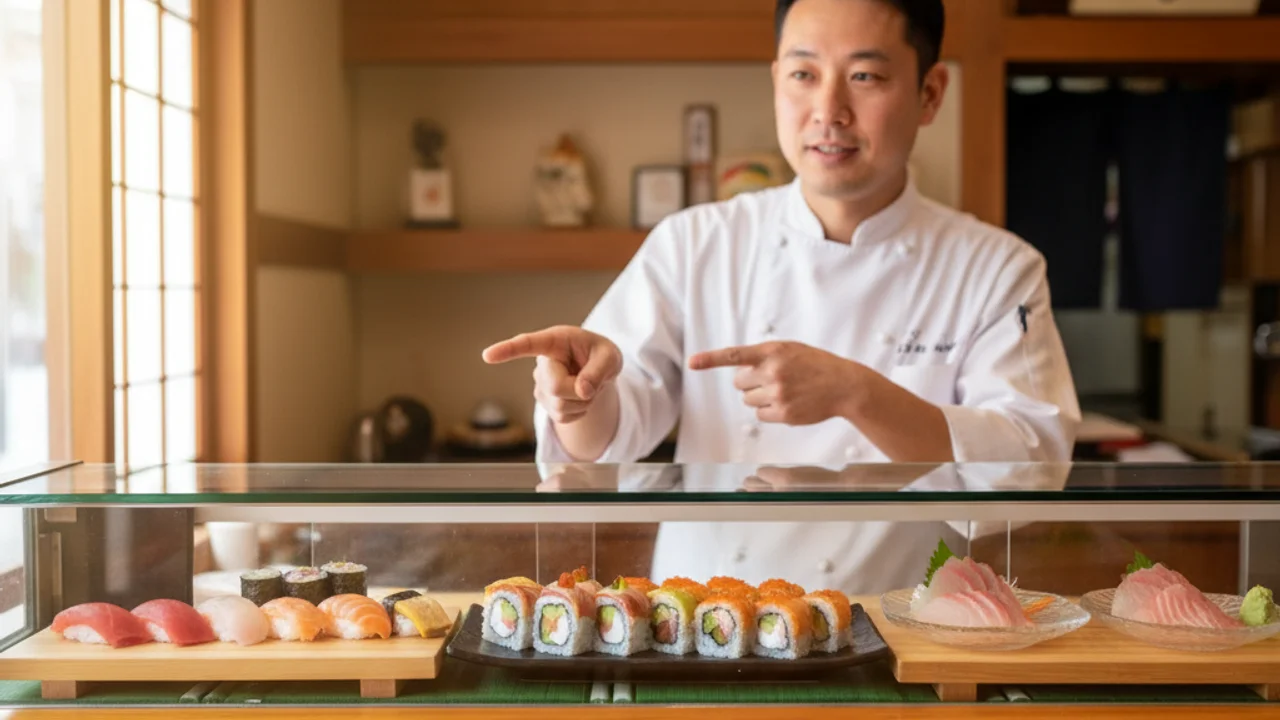
Menus can be overwhelming when you do not know what separates one format from another. The terms are Japanese, the visual differences are not always obvious, and asking can feel awkward. It should not. These formats have distinct histories, purposes, and flavour profiles. Knowing them makes ordering more confident and eating more satisfying.
Nigiri: Rice and Fish, Hand-Pressed
Nigiri is short for nigiri-zushi, literally "hand-squeezed sushi." The chef takes a portion of seasoned rice, presses it between the palms into an oblong shape, and lays a slice of fish or seafood on top. A thin line of wasabi is tucked between the two.
The result is a single bite that contains everything: the warmth and acidity of the shari, the fat and texture of the fish, the heat of the wasabi. Nothing is hidden. This is why nigiri is considered the purest test of a sushi chef's skill: there is nowhere to redirect attention.
The fish is not always raw. It may be lightly seared, marinated in soy (zuke), cured in salt and vinegar (as with mackerel), or cooked entirely (as with eel or octopus). The edomae tradition draws heavily on these preparations.
Sashimi: Fish Without Rice
Sashimi is sliced fish or seafood served without rice. Technically, it is not sushi at all, since the word "sushi" refers specifically to the vinegared rice. But it is always offered alongside sushi and serves a different purpose: letting the fish speak entirely on its own, without the support or competition of rice.
Sashimi is eaten with chopsticks. A small amount of soy sauce and wasabi are offered on the side, though at a serious counter the fish itself may already carry enough seasoning. The cut matters enormously: the angle, thickness, and grain of the slice all affect texture and flavour.
How to Eat Sushi ProperlyChopsticks, dipping, ginger: everything you need to know before you sit down.Maki, Uramaki, and Temaki: The Rolls
A maki is a roll: nori on the outside, rice inside, with a filling of fish, vegetables, or both. The roll is cut into six or eight rounds. Hosomaki are thin single-ingredient rolls; futomaki are thick multi-ingredient rolls. Both are straightforward.
Uramaki, the "inside-out roll," reverses the structure: rice is on the outside, nori wraps the filling from inside. The outside is often coated in sesame seeds, tobiko, or other toppings. The California roll is the most famous uramaki globally. It is not an edomae form, but it is widely enjoyed.
Temaki is a hand roll: a sheet of nori rolled into a cone, filled with rice, fish, and accompaniments. It is made to order and meant to be eaten immediately, while the nori is still crisp. Once it softens, the texture suffers.
In an uramaki, what is on the outside of the roll?
Gunkan: The Battleship
Gunkan, meaning "battleship," is a clever variation on nigiri. A strip of nori is wrapped around the perimeter of the rice ball to create a small raised cup. This cup holds loose toppings that cannot be pressed flat: ikura (salmon roe), uni (sea urchin), minced scallop, or finely chopped tuna.
The name comes from the shape: the nori walls rising above the rice resemble the hull of a warship. It is a practical invention that solved the problem of serving delicate or loose ingredients in the nigiri format without losing any of them.
When to Order What
At an omakase counter like Aji, this question is answered for you: the chef decides the format of each piece based on what is in season and what serves the fish best. You receive what is most appropriate, in the order that makes most sense.
When ordering à la carte, start with sashimi if you want to evaluate the fish before anything else. Move to nigiri for the full expression of the chef's craft. Add rolls if you want variety and texture, but be aware that a well-made nigiri will almost always be the most memorable bite on the table.
The format is not decoration. Each one was developed for a reason, and each tells you something different about the fish it carries.
Chopstick Etiquette at the Sushi BarHold chopsticks near the top third, rest them between bites, and never plant, rub, point, pass food with, or lick them. For nigiri, fingers- 1Nigiri: hand-pressed rice with fish on top, the core form of edomae sushi.
- 2Sashimi: fish without rice, technically not sushi, lets the fish speak alone.
- 3Maki: nori outside, rice and filling inside, cut into rounds.
- 4Uramaki: inside-out roll, rice on the outside, nori inside.
- 5Gunkan: nori-walled rice cup for loose toppings like uni or ikura.
- 6Temaki: nori cone, eat immediately while the seaweed is still crisp.
Understanding the formats does not make you an expert. It makes you a more present guest. And at the counter, presence is the best way to get the most out of every piece.
Come experience every format at the Aji counter, 929 St-Zotique Est, Montréal.
Make a reservation