Rosemont-La Petite-Patrie does not have the same international name recognition as the Plateau or the Mile End. That is partly why it has stayed so interesting. The neighbourhood's food scene has grown steadily, without the gentrification pressure that sometimes flattens what made a place worth visiting in the first place.
A Neighbourhood Built for Eating
Several structural conditions make Rosemont-La Petite-Patrie particularly good for restaurants. Commercial rents are lower here than on the Plateau or in the Mile End, which means an independent chef with a clear culinary vision and no investors to please can make the numbers work. The result is a neighbourhood where the restaurants you find are mostly the restaurants someone actually wanted to open.
The residential density is also a factor. Rosemont-La Petite-Patrie is a neighbourhood where people live year-round, not just visit. The regulars are food-engaged, loyal, and willing to try something unfamiliar. That kind of audience gives restaurants permission to take risks: a 40-seat counter serving an omakase menu, a natural wine bar with no cocktail list, a Japanese restaurant that does not offer California rolls.
The Character of the Neighbourhood
Walking through Rosemont-La Petite-Patrie, the dominant impression is one of particularity. The architecture is early twentieth-century Québécois: brick duplexes and triplexes with exterior staircases, narrow lots, corner depanneurs that have been there for decades. There is a sense of place that newer neighbourhoods lack.
The commercial arteries, particularly along Rosemont Boulevard, Beaubien Street, and Saint-Zotique East, mix independent food businesses with hardware stores, pharmacies, and the daily infrastructure of a working neighbourhood. This is not a restaurant district in the self-conscious sense: it is a neighbourhood that happens to have excellent restaurants, which is a different and more durable thing.
International influence is strong but not uniform. Portuguese, Italian, and Greek communities established roots here generations ago and their culinary traces remain. More recently, Japanese, Korean, Mexican, and Vietnamese establishments have joined them. The diversity feels organic rather than curated.
Jean-Talon Market and Local Sourcing
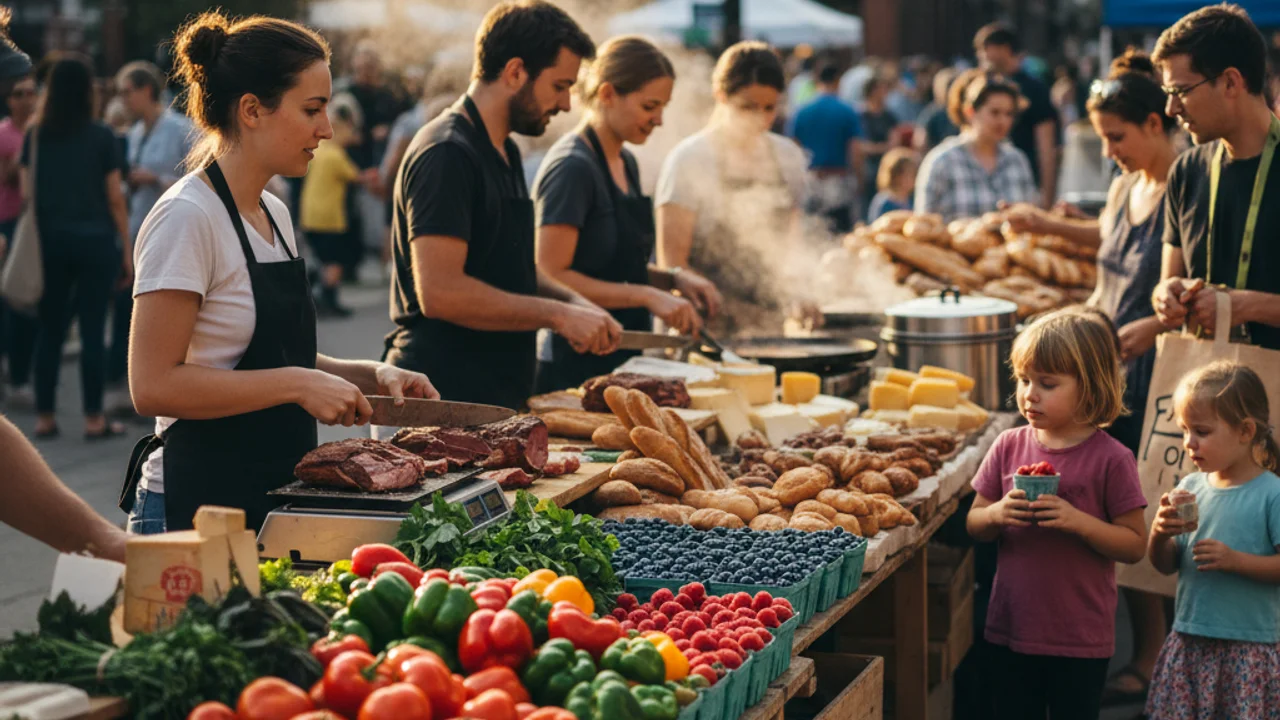
Jean-Talon Market, at the southern edge of the neighbourhood near métro Jean-Talon, is one of North America's largest outdoor markets and a foundational part of what makes Rosemont-La Petite-Patrie a serious food address. Vendors sell Québec produce, charcuterie, cheese, fish, spices, and prepared food year-round, with the outdoor stalls expanding dramatically in summer and autumn.
For restaurants in the neighbourhood, Jean-Talon is both a supplier and a statement of intent. A kitchen that sources from the market is a kitchen paying attention to what is in season. Several of the neighbourhood's Japanese restaurants, including Aji, incorporate seasonal Québec produce alongside Japanese-sourced ingredients. The proximity makes that integration natural.
Japanese Food in Montréal: What to Know Before You GoUnderstanding the broader Japanese dining scene before you choose a restaurant.Why Aji Chose Rosemont
Aji Bar Sushi & Izakaya MTL opened at 929 Saint-Zotique Est because the neighbourhood fit the project. A serious Japanese counter requires an audience that will show up for the experience rather than for convenience. Rosemont-La Petite-Patrie has that audience. It also has the kind of street-level character, residential, particular, non-touristy, that makes a counter restaurant feel like a discovery rather than a destination.
The neighbourhood also rewards consistency. Rosemont restaurants that do their work quietly and well build loyal clientele over time. That is the model Aji operates on: a small counter, a tight menu, and a commitment to craft that does not require foot traffic from a tourist corridor to survive.
Which métro station provides access to Jean-Talon Market?
Practical Information for Visitors
Getting to Rosemont-La Petite-Patrie is straightforward. Métro Rosemont on the orange line deposits you at the heart of the neighbourhood, near Rosemont Boulevard and the eastern part of the food corridor. Métro Beaubien covers the western section. Bus 18 on Saint-Zotique East connects the neighbourhood east-west and passes directly in front of Aji at 929 Saint-Zotique Est.
Street parking is available on most residential streets in the neighbourhood, particularly on evenings and weekends. By bicycle, the neighbourhood is easily accessible from the Plateau or the Mile End via the Saint-Zotique or Rosemont cycling paths.
If you are coming from outside Montréal, the neighbourhood rewards a full evening: arrive early, walk through the market if it is open, explore the commercial streets before your reservation, and end the evening at the counter.
Before and After: Aji's Neighbours
Five minutes on foot from 929 Saint-Zotique Est, you cross several landmarks worth the detour. Plaza Saint-Hubert, undergoing a full revitalization since 2020, brings together independent shops, wine bars, and one of Montréal's most photogenic commercial neon stretches. To the north, Beaubien East hosts La Récolte and a handful of specialty coffee spots that anchor the local third-wave scene.
For a pre-dinner drink, several wine bars on Saint-Zotique and Beaubien stock sharp natural wine lists. A good warm-up before bringing your own bottle of mineral white to Aji's counter for the sushi pairing. For a post-meal coffee, Cafe Pista and Pourquoi Pas Espresso Bar both run later than the rest of the neighbourhood.
If you are visiting Rosemont for a longer stay, Jean-Talon Market sits a 15-minute walk away and deserves a full morning. The neighbourhood reaches east toward Parc Maisonneuve and the Olympic Stadium, two family-friendly destinations a short bike ride away. It also makes an ideal launchpad for exploring the Plateau and Little Italy the next day.
The Express Fusion Lunch on St-Zotique: Tao, Pho, and PokéAji's lunch goes express and fusion: General Tao chicken, Pho, and poké bowls, made with the same care as the evening omakase, on St-ZotiqueSushi Bar vs. Japanese Restaurant in Montréal: What's the Difference?A sushi bar is defined by counter seating, direct chef interaction, and a focused menu. A Japanese restaurant may offer broader formats. Kno- 1Rosemont-La Petite-Patrie has lower rents and a food-curious residential population that supports serious independent restaurants.
- 2Jean-Talon Market, at the southern edge of the neighbourhood, is a key supplier for local restaurants and worth a visit in its own right.
- 3The neighbourhood's character is residential and particular: it rewards restaurants that are authentic rather than spectacular.
- 4Access is easy: métro orange line to Rosemont or Jean-Talon, bus 18 on Saint-Zotique East.
- 5Reservations are essential at the neighbourhood's best small restaurants.
Rosemont-La Petite-Patrie is worth knowing beyond a single restaurant visit. It is the kind of neighbourhood that changes the way you think about a city, if you take the time to walk it slowly.
Reserve your seat at the Aji counter, 929 Saint-Zotique Est, in the heart of Rosemont.
Make a reservation