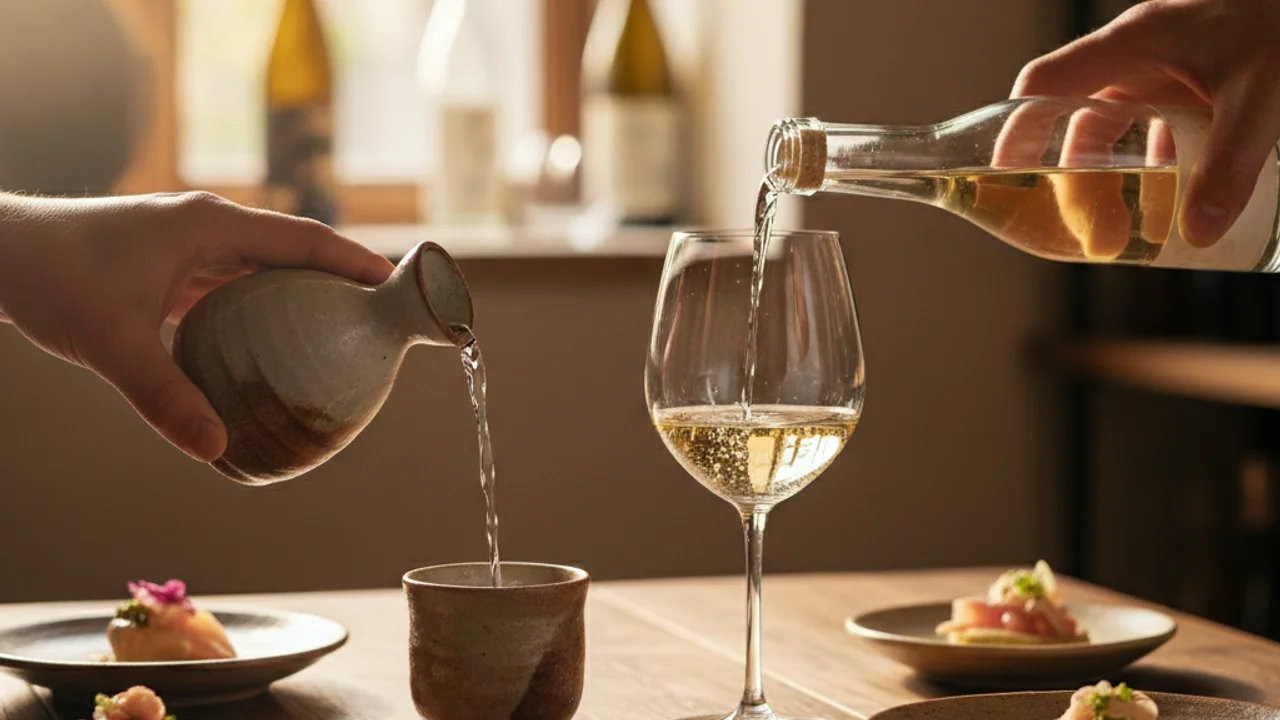
It is a question worth settling before you head to the SAQ or the sake aisle. You have a seat at the Aji counter, an omakase ahead of you, and a choice to make. Sake or white wine? The answer is less about a single winner and more about understanding what each brings to the table, and when.
Sake's Natural Affinity with Sushi
Sake and sushi share an origin: both are built around Japanese rice and water. This is not just poetic. The brewing process produces a liquid with amino acids that align closely with the glutamates in raw fish, the compounds responsible for umami. Drinking sake alongside nigiri does not create contrast so much as it creates continuity.
There are no grape tannins in sake. Tannins are what create the metallic sensation when you drink a tannic red with raw fish. Sake sidesteps this problem entirely. The interaction between sake and sashimi is clean, quiet, and rarely disruptive. It does not compete with the fish; it accompanies it.
The Case for White Wine
A well-chosen white wine brings something sake cannot always match: pronounced acidity. The tartaric acid in grapes creates a cutting, refreshing quality that cleanses the palate after fatty fish and stimulates appetite for the next piece. Champagne adds effervescence on top of that acidity, which does additional work between bites.
White wine also introduces aromatic complexity that is foreign to the sushi experience in a way that can be genuinely pleasurable. The flint and lemon curd of a great Chablis, the yeasty depth of a blanc de blancs Champagne: these flavours do not exist in Japanese cuisine, but they complement it well precisely because of that difference.
Wine Pairing with Sushi: Combinations That WorkThe best styles, what to avoid, and how to pair by fish type.When Sake Has the Edge
Sake is the better choice for very delicate, lean fish: flounder, sea bream, young yellowtail, white shrimp. These pieces have a fragility that even a well-chosen white wine can overwhelm with its acidity or aromatics. A chilled ginjo sake lets them speak clearly.
Sake is also better for dishes with pronounced umami: marinated tuna (zuke maguro), ikura, and preparations with dashi-based sauces. The amino acid alignment between sake and umami-rich foods is something no wine can quite replicate.
Why does sake pair so naturally with raw fish at the sushi counter?
When White Wine Has the Edge
High-acid whites win with fatty fish. A slice of otoro, a piece of salmon belly, or mackerel pressed sushi (battera) all benefit from the cutting acidity of a Chablis premier cru or a brut Champagne. The acidity lifts the fat and prevents the palate from becoming fatigued.
White wine is also the better companion for a long tasting menu where variety is wide. The range of aromatic expression in whites, from the citrus of Muscadet to the stone fruit of dry Pinot Gris, creates a more dynamic experience across many different pieces. Sake is more consistent, which is a strength with focused menus and a limitation with very diverse ones.
A Simple Decision Framework
If your meal centres on delicate, lean, lightly seasoned pieces, choose sake. A chilled junmai ginjo or daiginjo is the right call.
If your meal includes a range of fat levels, from lean white fish through otoro and salmon, or if you want the dynamic interplay of acidity with richness, choose a high-acid white. Chablis or brut Champagne covers the widest ground.
If you cannot decide: bring both. One bottle of chilled sake for the first half, a Crémant or Chablis for the second. Confirm that your restaurant's AV permit covers sake before you arrive.
BYOB in Montréal: How It WorksEverything about the AV permit, corkage fees, and etiquette before you arrive.What Wine to Bring to a Japanese RestaurantGo for acid-driven whites in the $15 to $25 range. Chill before you arrive. For nigiri, lean mineral. For rolls, a touch more body is fine.- 1Sake has a natural cultural and chemical affinity with sushi: no tannins, umami alignment, shared rice-and-water origin.
- 2High-acid whites like Chablis and Champagne are the strongest choice with fatty fish.
- 3Sake works best with delicate, lean, lightly seasoned pieces.
- 4White wine brings acidity and aromatic complexity that creates a more dynamic pairing across a long menu.
- 5Bringing both sake and white wine is a valid, excellent strategy for a full omakase.
There is no wrong answer here, only informed choices. Sake and white wine both belong at the sushi counter. Understanding when each has the advantage is what turns a good meal into a great one.
Book your place at the Aji counter and bring whatever speaks to you tonight.
Make a reservation