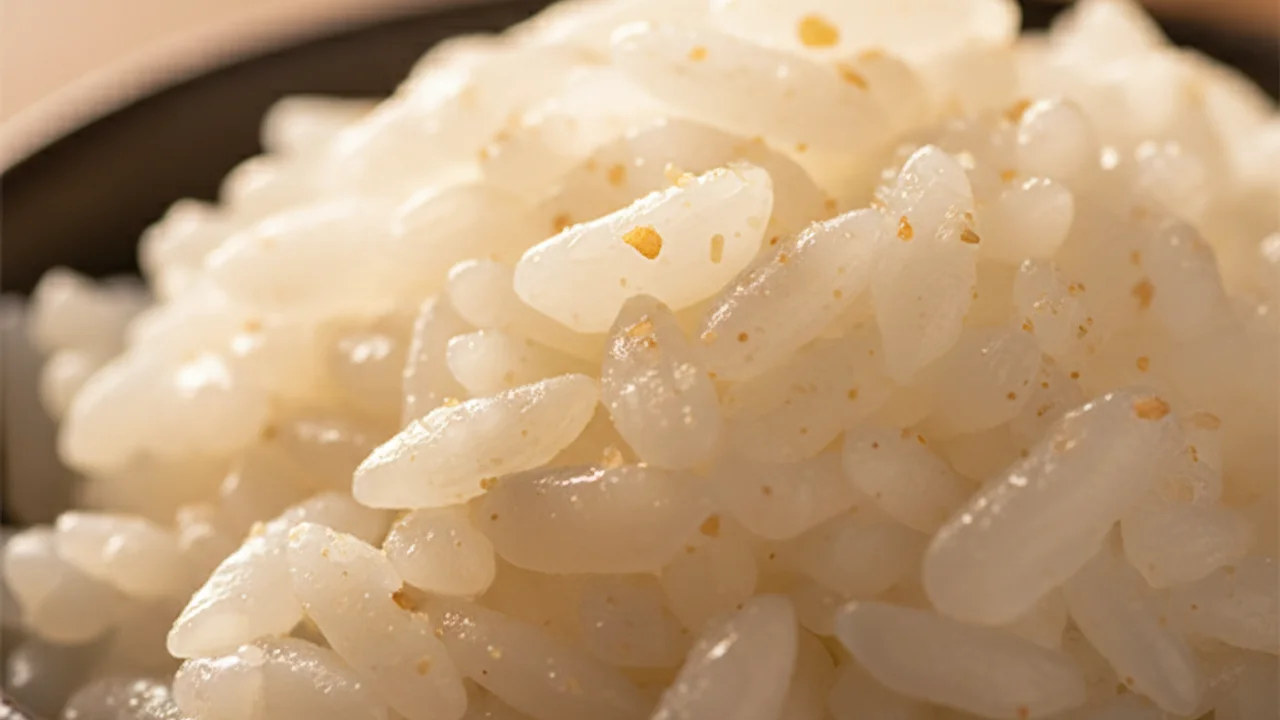
When people talk about sushi, they talk about the fish. The tuna, the sea urchin, the season, the sourcing. Rarely the rice. Yet every serious sushi chef will tell you the same thing: shari accounts for half the work, and in some ways it is the more revealing half. A weak shari exposes a mediocre kitchen more reliably than a weak fish selection.
What Is Shari?
Shari is the Japanese term for vinegared sushi rice. The word derives from Sanskrit and refers to sacred relics, which gives a sense of the reverence with which Japanese chefs approach it. In practice, shari is short-grain rice cooked to precise firmness, then folded with awasezu: a seasoning blend of vinegar, sugar, and salt.
The word "sushi" itself refers to the rice, not the fish. Sashimi, which is fish served without rice, is technically not sushi at all. This linguistic detail matters: it places the rice at the centre of the tradition, not the margin.
Su-meshi is a synonym used in some regions: "su" for vinegar, "meshi" for cooked rice. Both terms point to the same preparation. At Aji, the term is shari.
The Rice Variety: Koshihikari
Not all rice is suited for shari. Long-grain varieties such as basmati are too dry and do not hold together under pressure. Medium-grain rice lacks structural integrity. The variety used consistently at serious sushi counters is koshihikari, a short-grain Japanese cultivar developed in the 1950s and grown originally in Niigata Prefecture.
Koshihikari has a high proportion of amylopectin, the branched starch that gives the cooked grain a slight natural cohesion. This cohesion is what allows the chef to press the rice by hand into a nigiri that holds its shape through transport from hand to plate to mouth, without ever becoming gluey or compacted.
The rice is cooked with less water than for ordinary table rice. The goal is a grain that is firm at the surface and tender at the core. Too much water and the rice collapses under the chef's hands. Too little and it is chalky and inexpressive.
The Vinegar Blend: Red or White
The awasezu, the seasoning blended into hot rice, combines vinegar, sugar, and salt. The proportions are one of the most guarded decisions in any sushi kitchen. The general structure is roughly four parts vinegar to one part sugar to half a part salt, but every chef adjusts this according to the rice, the season, and personal philosophy.
White rice vinegar (shirazu) is the modern standard. It is neutral in colour, clean in acidity, and transparent in flavour. It leaves the rice white and bright, with a direct, uncomplicated tartness.
Red vinegar (akazu) is the traditional choice of the edomae school. It is produced from sake lees, the solid residue left after sake fermentation, aged for months or years until it develops its characteristic amber colour and complex flavour. Akazu has a much higher concentration of amino acids than white vinegar, which translates directly into a perceptible umami in every bite of rice. It also has a rounder, softer acidity.
When akazu is used, the shari takes on a warm beige tone, nothing like the stark white of modern sushi rice. The colour is the first visible signal that you are sitting in front of an edomae kitchen.
Red Vinegar: The Soul of Edomae ShariWhat akazu is, how it is made, and why it distinguishes edomae rice from everything else.Why is shari ideally served at approximately 37°C?
Temperature: The 37°C Rule
The most overlooked detail in shari preparation is temperature. The goal at the moment of service is approximately 37°C, the temperature of the human body. Most guests never consciously notice it: they simply feel that the rice is alive, expressive, harmonious with the fish.
At 37°C, the amylopectin starches are in their most supple state, giving the nigiri a cohesion that feels natural rather than compressed. The acidity of the vinegar is smooth and present without sharpness. The warmth of the rice gently warms the fish placed on top, releasing aromas that cold rice suppresses entirely.
A shari that is too cold becomes dense, crumbly, and expressionless. A shari that is too warm begins to cook the fish and throws the balance of the piece. The 37°C target is not an arbitrary convention: it is the result of centuries of observation by chefs who understood the chemistry before the chemistry had words.
To maintain this temperature, the chef presses each nigiri immediately before serving and places it directly in front of the guest. The rice is never refrigerated; it is held at room temperature under a damp cloth from the moment it is made until the last piece of the service.
Shari at Aji: Made Fresh Every Service
At Aji, the shari is prepared each evening before service begins. No rice from the previous night is carried forward. The quantity is calculated to cover the evening's covers without significant surplus.
The chef's awasezu uses a blend of red and white vinegar, adjusted by season and by the specific lot of rice in use. In winter, the acidity is slightly more pronounced; in summer it softens. The rice follows the seasons as the fish does.
After cooking, the rice moves into the hangiri, a flat cypress-wood tub, where the awasezu is folded in by hand and the rice is fanned to cool quickly without steam accumulating. It then rests covered with a damp cloth at room temperature until service. The preparation is never delegated, and the ritual is identical every evening.
Fish Aging in Japanese Cuisine: Why It MattersFish aging, or nekase, uses controlled refrigeration and time to let enzymes develop umami and improve texture. It is a precise daily practi- 1Shari is vinegared rice: the foundation of all sushi, as important as the fish.
- 2Koshihikari is the reference variety: short-grain, slightly cohesive, naturally sweet.
- 3Akazu (red vinegar) is the edomae choice: deeper umami, softer acidity, warm beige colour.
- 4Shari is served at 37°C: body temperature for supple starches and open aromas.
- 5At Aji, shari is made fresh every service, never refrigerated, never reused.
The next time you eat a nigiri, pay attention to the rice before the fish. If the shari is warm, well-seasoned, and holds together without feeling compressed, you are in good hands.
Taste the shari at Aji by sitting at the counter, 929 St-Zotique Est, Montréal.
Make a reservation