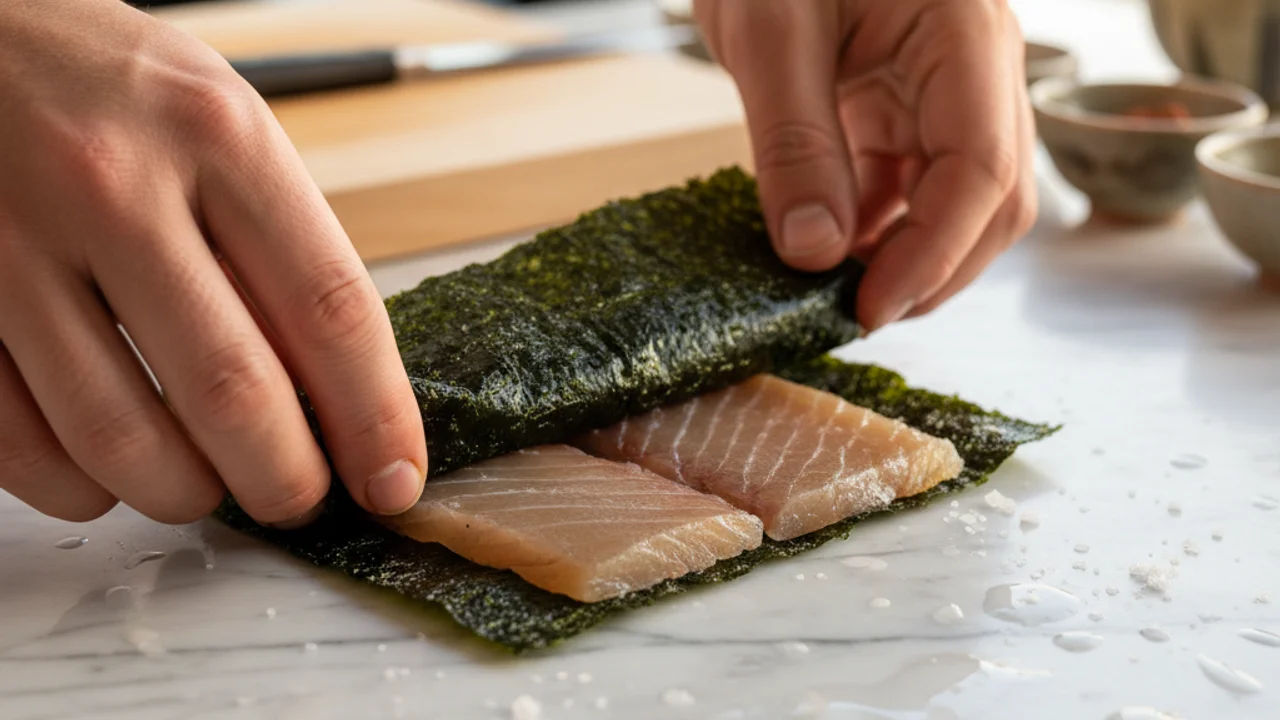
The idea that the freshest fish makes the best sushi is intuitive and, in many cases, wrong. Freshly caught fish can be stiff with rigor mortis, flavourless, and texturally unpleasant. What the best edomae chefs understand, and have understood for a long time, is that time applied correctly to the right fish produces something that fresh cannot.
What Fish Aging Is
Nekase means "to make lie down" in Japanese, a word that captures the patience required. After a fish is killed, bled, gutted, and butchered, it is wrapped or covered and placed in cold storage at temperatures between 0 and 2°C. There it rests, daily, under the chef's eye, for anywhere from one day to more than a week depending on the species.
The process is not fermentation in the traditional sense: no cultures are introduced, no pickling or salt is applied. The transformation is entirely enzymatic, driven by the fish's own internal chemistry in a controlled cold environment.
The result, when done well, is a fish with more complex flavour, a softer and more integrated texture, and an umami depth that raw, unaged fish simply does not have. The difference is not subtle. A chef who has worked with aged fish and then returned to unaged product will notice it in the first cut.
The Science of Umami Development
Fish muscle contains enzymes, primarily cathepsins and calpains, that continue to function at refrigeration temperatures. These enzymes break down structural proteins into shorter peptide chains and eventually into free amino acids. Glutamic acid is the most important of these for flavour: it is the primary source of umami, the fifth basic taste associated with depth, savouriness, and a long finish on the palate.
A second compound, inosinic acid (IMP), plays a related role. IMP accumulates rapidly in fish muscle in the hours after death, then degrades over time into hypoxanthine, which can give fish an unpleasant bitter note if aging goes too long. The peak of IMP, often twelve to twenty-four hours after harvest depending on the species, represents a brief window of maximum flavour development. After that, the glutamate pathway from protein breakdown becomes the dominant source of umami.
Fat content also matters. In fish with moderate fat distribution, like sea bream or yellowtail, the lipids undergo partial enzymatic breakdown that contributes additional complexity to the flavour, a richness that is distinct from the clean fat of fresh fish.
Edomae Sushi: A Tradition Born in Edo-Era TokyoThe history of edomae and the preservation techniques that defined it.Which Fish Age Well
Not all fish benefit from aging, and some are actively damaged by it. The key factors are flesh density, fat content, and the fish's natural enzyme activity.
Sea bream (tai) is one of the classic aging candidates in edomae. Its firm, white flesh develops a sweetness and an umami depth over two to four days that is entirely absent on the day of harvest. Skilled chefs consider aged tai a benchmark species for evaluating a kitchen's aging practice.
Flounder (hirame) has very lean, delicate flesh that responds well to short aging, typically one to three days. It develops a subtle sweetness and loses the slight rubbery quality of the just- caught fish.
Yellowtail (buri) is a fattier fish that can handle longer aging. As it ages, its considerable fat content redistributes through the muscle, giving the flesh a more consistent, buttery texture.
Bluefin tuna is aged in large loins for the longest periods of any common sushi fish. Premium tuna may be aged a week or more. The deep red colour darkens slightly; the texture softens from firm to silky; the flavour moves from clean iron and salt to layered umami with a long, complex finish.
Very small, very lean fish, and fish with naturally high enzyme activity, age poorly. They go soft before they develop flavour.
What is the primary flavour compound that fish aging develops through enzymatic protein breakdown?
The Precision Required
Aging fish sounds simple: put it in the cold and wait. The reality is more demanding. Temperature must be held consistently between 0 and 2°C: warmer and bacterial growth accelerates faster than flavour development; colder and the enzymatic activity slows or stops entirely.
Humidity matters. Fish wrapped too tightly in plastic may develop off-flavours from accumulated moisture. Fish left exposed dries at the surface and loses valuable moisture. The wrapping method, the material, and how frequently the fish is unwrapped and inspected are all part of the practice.
Daily observation is not optional. The chef looks at the colour of the flesh, evaluates the smell (it should smell of the sea, clean and oceanic, never sour or ammoniac), and presses the surface lightly to assess texture. A fish that has gone one day too long is not a tragedy if the chef catches it before service. A fish served one day past its peak is a failure.
How Aji Applies Aging Every Day
At Aji Bar Sushi & Izakaya MTL, 929 St-Zotique Est, the aging of fish is a daily practice, not an occasional one. Fish arrive and are immediately evaluated: which pieces can be served that evening, which need another day, and which are at their peak for the omakase sequence.
Different species are on different timelines simultaneously. On any given evening, a piece of sea bream may be on day three, a loin of bluefin tuna on day five, and a piece of flounder on day one. The chef tracks each piece individually, adjusting the service plan based on what is ready rather than what arrived most recently.
This is what separates an edomae counter from a restaurant that simply buys fish and cuts it. The product is actively managed across time, and the result, night after night, is fish at the moment of its fullest expression.
Red Vinegar: The Soul of Edomae ShariAkazu is red vinegar made from sake lees. Richer in umami, softer in acidity, and more complex than white rice vinegar, it is the traditiona- 1Nekase is the controlled aging of fish at 0 to 2°C, driven by the fish's own enzymes.
- 2Enzymatic breakdown produces glutamic acid: the primary source of umami in aged fish.
- 3Sea bream, flounder, yellowtail, and bluefin tuna all age well; very lean or small fish do not.
- 4Precise temperature, humidity, wrapping, and daily observation are all essential.
- 5At Aji, multiple fish are aged simultaneously on individual timelines, served at their peak.
Aging is patience made edible. It is the understanding that the best a fish can be is not always the day it arrives, and that knowing the difference is what makes a chef worth sitting in front of.
Taste the difference that controlled aging makes at the Aji counter, 929 St-Zotique Est, Montréal.
Make a reservation