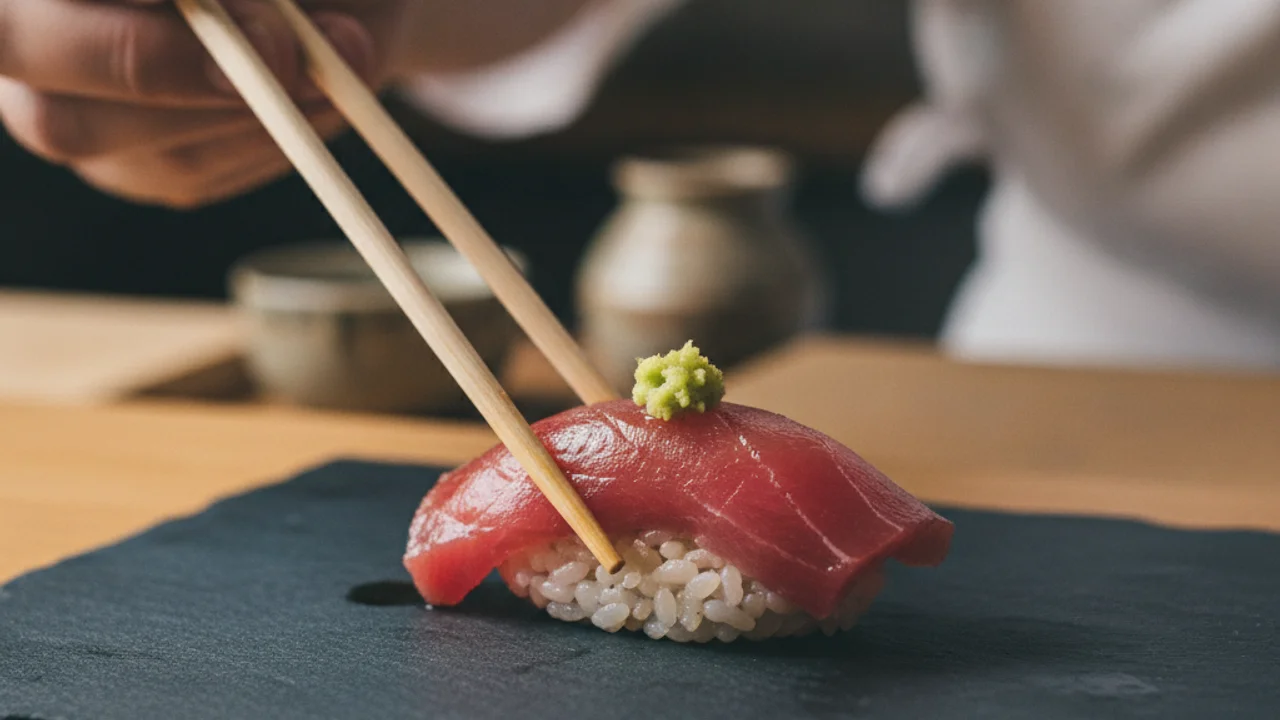
It's a familiar ritual for many sushi lovers: taking a dollop of green paste, stirring it into a small dish of soy sauce until the liquid becomes a murky, spicy concoction. Yet, in the world of traditional sushi, this common practice is widely considered a faux pas. This isn't just a matter of being snobbish; this guideline is about preserving the delicate balance of flavors that the chef, or itamae, has painstakingly crafted for you.
Here at Aji Bar Sushi & Izakaya, in Montreal's Rosemont-La Petite-Patrie neighbourhood, we believe that understanding the 'why' behind each tradition enriches the entire experience. So, let's explore the art of sushi dining and find out why your wasabi and soy sauce are best enjoyed as separate partners.
- Address
- 929 Saint-Zotique St E, Montreal, QC H2S 1M9
- Phone
- 514 272 2929
- Feature
- Bring Your Own Wine (BYOW)
- Neighbourhood
- Rosemont-La Petite-Patrie
Why Purists Frown Upon the 'Wasabi Slurry'
The work of a sushi chef is an art of precision. Each piece of nigiri is a composition where every element plays a crucial part. The chef selects fish for its peak freshness and texture, prepares perfectly seasoned vinegar rice, and, for most nigiri, applies a tiny smear of wasabi directly underneath the fish. This amount isn't random: it's carefully judged to enhance the fish's natural flavor without overwhelming it.
When you mix wasabi into soy sauce, you create what's often called a 'wasabi slurry.' This potent mixture masks the very complexities you're paying for: the subtle sweetness of a scallop, the rich fattiness of tuna belly, the clean taste of sea bream. You essentially flatten the flavour profile, working against the chef's intention to take you on a journey with each distinct piece.
Chopstick Etiquette at the Sushi BarThe True Purpose of Wasabi and Soy Sauce
To fully grasp the concept, it helps to think of these two condiments as a team of specialists rather than a single entity. Wasabi is meant to provide a sharp, brief burst of heat that travels up through the nose and then quickly fades, cleansing the palate. Its pungency is designed to cut through the richness of oily fish and complement its aromas. Soy sauce, on the other hand, adds a salty depth and umami flavor that rounds out the bite.
By keeping them separate, you allow your palate to experience these effects sequentially. You get the salty touch of the soy sauce on the fish, then the heat of the wasabi as it activates, followed by the pure taste of the fish and rice. It’s a symphony of flavors, whereas the mixture is a single, loud, and sustained note.
How to Eat Sushi the Right Way
So, what's the proper way to proceed if you enjoy that extra kick? Sushi etiquette offers a simple, respectful method:
1. Pour a small amount of soy sauce into your dish. It's considered poor form to overfill it and waste sauce.
2. If you want more wasabi than the chef has provided, use the tip of your chopstick to pick up a tiny amount and apply it directly onto the fish.
3. Pick up the sushi with your chopsticks (or your fingers, which is perfectly acceptable for nigiri) and turn it slightly upside down.
4. Lightly dip the fish side into the soy sauce, avoiding the rice. The rice acts like a sponge and will soak up too much soy sauce, unbalancing the flavor and potentially causing the nigiri to fall apart.
5. Eat the sushi in one bite, placing it in your mouth fish-side down to allow the primary flavors to hit your tongue first.
By trying this method, especially with the high-quality ingredients we pride ourselves on at Aji Bar, you'll unlock a new level of complexity in every piece.
Gari and Soy Sauce: Using Ginger and Dipping WellReal Wasabi vs. Horseradish Paste: A Game-Changing Difference
It's also crucial to note that most of the green paste served as 'wasabi' in North America isn't wasabi at all. It's typically a mixture of horseradish, mustard powder, and green food coloring. This concoction is far more aggressive and one-dimensional than true wasabi, which comes from the grated rhizome of the Wasabia japonica plant.
Real wasabi, freshly grated, has a more herbaceous, complex flavor with a hint of sweetness and a heat that dissipates cleanly. Its flavor is so delicate that drowning it in soy sauce would be a true shame. If you ever have the opportunity to try it, savor it on its own with your fish to appreciate its full character.
Are There Any Exceptions to the Rule?
Ultimately, the goal of any meal is enjoyment. If you truly prefer the taste of a wasabi-soy-sauce mixture, no one should stop you, especially in the friendly, relaxed atmosphere of an izakaya like Aji Bar. However, we encourage you to try the traditional method at least once, to honor the chef's craft and to potentially discover a new, more nuanced way of enjoying your sushi.
For sashimi, which consists of slices of raw fish without rice, the approach is different. Since there's no pre-applied wasabi, it is perfectly acceptable to place a small dab of wasabi on the fish before dipping it into the soy sauce. The key, as always, is moderation to avoid overpowering the star of the show: the fish itself.
- 1The chef has already placed the correct amount of wasabi in your nigiri for a perfect balance.
- 2Mixing wasabi and soy sauce creates a single, overpowering flavor that masks the fish's nuances.
- 3The proper method: add extra wasabi to the fish itself, then lightly dip the fish side in soy sauce.
- 4Most common 'wasabi' is horseradish paste; real wasabi is far more delicate and rare.
- 5While etiquette aims to enhance flavor, your personal enjoyment is ultimately what matters most.