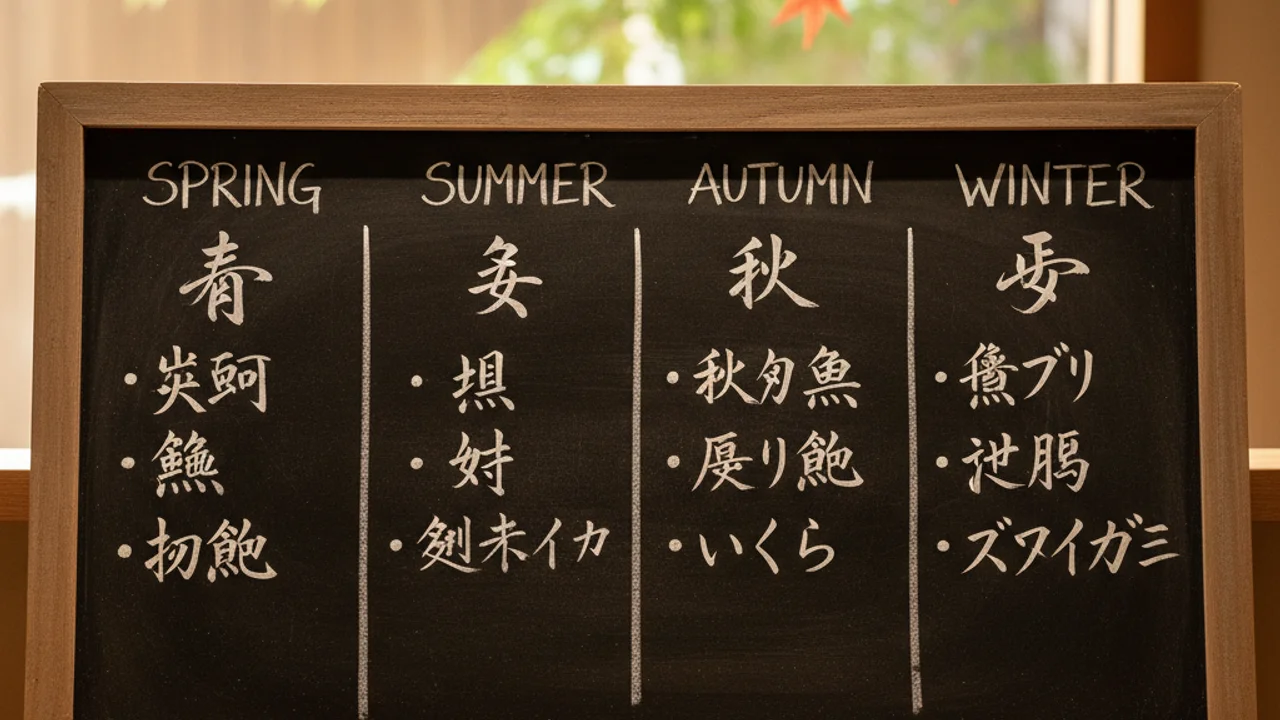
In most Western restaurant contexts, "seasonal" means local vegetables or fruit. In Japanese cuisine, seasonality extends to every category of ingredient, and applies with particular precision to fish. The concept of shun (旬) goes beyond availability. It describes the narrow window when an ingredient achieves its ideal condition, a quality that is not merely good but unrepeatable until the same moment returns next year.
What Is Shun?
The character 旬 was originally a calendar unit, meaning a ten-day period. In culinary Japanese, it evolved to describe the peak season of an ingredient: the moment in its annual cycle when it is fattest, most flavourful, or most nutritionally complete.
Shun is not just about freshness. A fish caught yesterday out of season is not shun. A fish caught at the peak of its seasonal cycle, handled correctly, and served within its window is shun regardless of whether it required freezing in transit. The concept prioritizes condition and timing over a narrow definition of "fresh."
For a chef trained in the Japanese tradition, serving an ingredient out of its shun is a failure of judgement, regardless of how good the ingredient may be in absolute terms. The menu changes because the season changes, not the other way around.
Spring: Delicacy and New Light
Spring is the season of beginnings in Japanese culinary culture. The fish that peak in this window tend to be lighter, more delicate, and less fatty than what comes before or after.
Sakura masu (cherry salmon) is named for the season. It arrives in rivers to spawn as the cherry blossoms open, and its flesh at this moment has a pale pink colour and a gentle sweetness unlike any other time of year. It is one of the most celebrated shun fish in the Japanese tradition.
Madai (sea bream) in spring carries the nickname sakura-dai, cherry blossom bream, for its pink-flushed skin and the timing of its peak. Young and lean, it has a clarity of flavour that makes it the ideal early-spring nigiri piece.
Hamachi (young yellowtail) is also in its prime in spring, before the fish grows into the larger, fattier buri of winter. Spring hamachi is leaner, brighter, and more delicate than buri.
Summer: Brightness and Fat
Summer brings the fish that gave Aji Bar Sushi & Izakaya MTL its name. Aji (horse mackerel, Trachurus japonicus) reaches its shun in midsummer. Lean and bright with a clean, slightly acidic finish, it is one of the defining fish of the Edomae sushi tradition and a test of a chef's knife work and seasoning hand.
Iwashi (sardines) are prized in summer for their intense flavour and high fat content. In peak season, a properly handled iwashi nigiri has none of the bitterness associated with out-of-season oily fish. It is rich, clean, and lively.
Ayu (sweetfish) is an inland river fish considered the quintessential summer ingredient in Japanese cooking. Its name refers to the sweet, watermelon-like aroma of its flesh. It is rarely served raw but appears in grilled preparations at serious Japanese tables during the summer months.
Bluefin vs. Yellowfin Tuna: What's the Difference?How the season affects the fat content of tuna and when to eat which cut.What does the Japanese concept of shun (旬) refer to?
Autumn and Winter: Richness and Depth
As water temperatures drop in autumn and winter, fish accumulate fat reserves. This is the season of richness: the shun fish of these months tend to be fuller, more complex, and more commanding on the palate.
Sanma (Pacific saury) is one of the most beloved autumn arrivals in Japan. Its fatty, assertive flesh and its associations with autumn evenings make it an almost cultural touchstone. It is typically grilled in Japan, but excellent sanma can appear as sashimi at a well-sourced counter.
Hirame (flatfish or flounder) peaks in winter, when its muscle is firm and its delicate flavour is at its most pronounced. It is the opposite of a showy fish: hirame rewards attention, not sensation. A thin slice of winter hirame nigiri is one of the most refined things served at a Japanese counter.
Buri (adult yellowtail) reaches its shun in winter, when fat content is at its highest. Buri in peak season bears almost no resemblance to summer hamachi: it is rich, fatty, and deeply flavoured. Kanpachi (amberjack), a related species, follows a similar seasonal arc.
How Aji Follows the Season
The menu at Aji Bar Sushi & Izakaya MTL does not work from a fixed list. The chef selects fish based on what arrivals reflect peak seasonal quality. Some species appear for only a few weeks each year. Others are available more broadly but are served only when they meet the standard the season demands.
This means that two visits two months apart can feel like entirely different restaurants. That is the point. Shun at Aji is not a marketing concept. It is the operating principle behind every decision about what goes on the counter and what does not.
If you want to know what is in season when you visit, ask the team. They will tell you exactly what arrived, where it came from, and why it is on the menu that week.
Uni, Ikura, Tobiko: The Delicacies of the Sushi CounterSea urchin, salmon roe, and flying fish roe: their seasons and how to approach them at the counter.Fresh vs. Frozen Fish for Sushi: The TruthFor most sushi fish, flash-freezing at very low temperatures is both a food safety requirement and a quality preservation method. 'Fresh' is- 1Shun (旬) is the Japanese concept of peak season: the brief window when an ingredient is at its best.
- 2Spring brings cherry salmon, young yellowtail, and sea bream. Summer is the season of aji and sardines.
- 3Autumn and winter bring the richest fish: sanma, buri, hirame, and prime bluefin tuna cuts.
- 4At Aji, the menu is shaped by shun: fish appears on the menu when it is remarkable, not just when it is available.
- 5Asking what is in season at the counter is always the right question to start with.
Eating shun is not a complicated practice. It requires only one thing: trust the chef to know when the fish is right. At Aji, that is exactly the kind of trust we ask for and work every day to deserve.
Visit the counter and ask what is in season today. The answer changes every week.
Make a reservation