Every izakaya has its own list of specialities, but certain dishes appear on nearly every menu in Japan, and for good reason. They have been refined over generations to do one thing exceptionally well: pair with a cold beer, a glass of sake, or a highball while a group of people talk late into the evening. These are not side dishes. They are the point.
Yakitori: skewered chicken, the binchōtan tradition
Yakitori (焼き鳥) means "grilled bird": chicken pieces threaded onto thin bamboo skewers and, in the tradition, cooked over charcoal. The best traditional yakitori uses binchōtan, a dense Japanese hardwood charcoal made from ubame oak. It burns at a consistent high heat with almost no smoke, which means the chicken colours and chars without picking up off-flavours from the fuel. The result is clean, concentrated, with a faint mineral char that no other cooking method replicates.
Yakitori comes in two primary styles. Tare (タレ) is glazed with a reduced sauce of soy, mirin, sake, and often sugar, built up in layers over repeated brushings during cooking. The glaze is sweet, savoury, and lacquered: it caramelises at the edges and creates a complex depth. Shio (塩) means salt only, and it is the purer approach: nothing interferes with the flavour of the chicken itself, and a good piece of shio yakitori reveals how much quality matters in the meat.
Beyond breast and thigh, the full yakitori menu includes cuts that make first-timers hesitate: cartilage (nankotsu), crispy chicken skin (torikawa), liver (reba), hearts (hāto), and the soft tail piece known as bonjiri. Order across the range. The unusual cuts are often the most rewarding.
Karaage: Japan's version of fried chicken
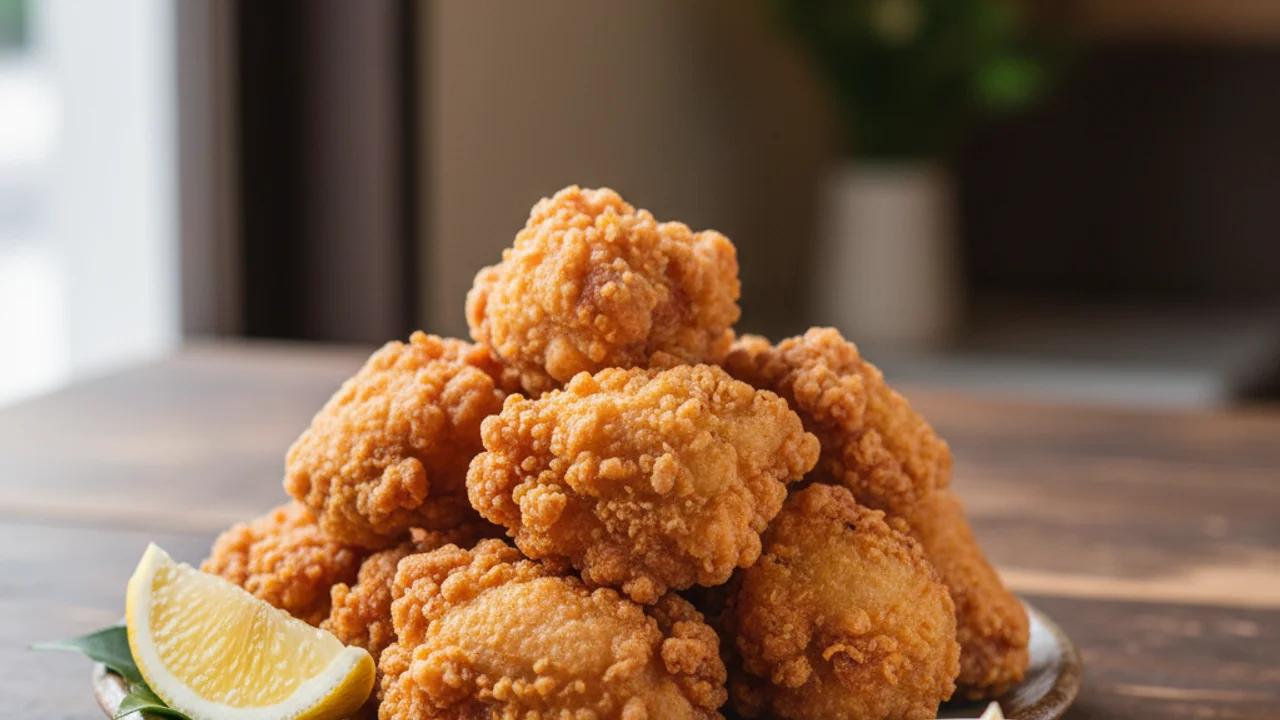
Karaage (唐揚げ) is one of Japan's most beloved comfort foods and an izakaya essential. The technique differs from Western fried chicken in one key way: the coating is katakuriko, potato starch, rather than flour. Potato starch produces a thinner, crispier crust that shatters cleanly rather than crumbling, and it stays crisp longer than a flour coating.
The chicken, usually thigh for maximum flavour and moisture, is marinated before frying: typically soy sauce, sake, mirin, fresh ginger, and garlic. The marinade penetrates the meat, so every bite is seasoned through, not just at the surface. The frying happens twice at good karaage counters: a first fry to cook through, a rest, then a second fry at higher heat to crisp the exterior.
Karaage is served with a wedge of lemon and often a small dish of Japanese mayonnaise. Both are optional, but the lemon is worth using: a squeeze of acidity cuts the richness of the fry and makes the next bite taste like the first one.
What Is an Izakaya? Japan's Favourite After-Work SpotThe history, culture, and social role of Japan's defining after-work gathering place.Edamame, gyoza, and agedashi tofu
Edamame (枝豆) are young soybeans served in their pods, boiled and salted. They arrive at the table early, sometimes without being ordered, as a snack to eat while the rest of the food comes out. The gesture of eating edamame, squeezing each pod to pop the beans into your mouth, is social and rhythmic: something to do with your hands while you talk.
Gyoza (餃子) are pan-fried dumplings with a filling of pork, cabbage, garlic, and ginger. The technique produces a crispy base and a steamed, tender top: two textures in one bite. Gyoza are served with a dipping sauce of soy and rice vinegar, sometimes spiked with chilli oil. They are among the most approachable izakaya dishes for newcomers and among the most consistently satisfying.
Agedashi tofu (揚げ出し豆腐) is silken tofu lightly dusted with potato starch and fried until the outside is just barely set, then placed in a warm dashi-based broth with grated daikon and ginger. The contrast of the barely-crisp exterior softening into the broth, and the gentle flavour of the dashi, makes agedashi tofu one of the most elegant things on any izakaya menu. It is worth ordering even if tofu is not usually your first choice.
What starch is traditionally used to coat karaage chicken?
How to order izakaya-style
Resist the instinct to order everything at once. The izakaya format is designed for ordering in waves: two or three dishes to start, then more as the first plates clear. This keeps the food arriving fresh and gives the conversation room to breathe.
Everything lands at the centre of the table and is shared by everyone. No one "owns" a dish. If you like something particularly, say so, but leave some for the others. If a plate empties and the evening is still going, order it again. Repetition is a form of praise at an izakaya.
A good progression might be: edamame immediately, then a mix of yakitori skewers (shio and tare), then karaage, gyoza alongside a second round of drinks, and agedashi tofu to close. Nothing is fixed. Let the conversation decide.
Best drink pairings
Yakitori tare pairs well with cold lager or a light junmai sake: the sweetness of the glaze echoes the sake's clean rice notes without competing. Shio yakitori opens up with a dry sparkling wine or a cold ginjo sake, where the effervescence lifts the salt.
Karaage is made for beer, specifically a cold, slightly bitter lager that cuts the richness of the fry. A highball, Japanese whisky with sparkling water, works equally well and is how most Japanese izakayas serve it.
Edamame is deliberately neutral and pairs with anything. Gyoza handles cold beer or a dry sake. Foragedashi tofu, something light and clean: a junmai or sparkling water. The delicacy of the dashi deserves a drink that does not overwhelm it.
The Japanese Art of Sharing a MealHow communal eating and the itamae tradition shape the Japanese dining experience.The Izakaya Experience in MontréalMontréal's Japanese dining scene has matured significantly. The izakaya spirit, shared small plates, an open kitchen, a relaxed atmosphere,- 1Yakitori is skewered chicken, traditionally grilled over binchōtan: tare for a sweet-savoury glaze, shio for pure chicken flavour.
- 2Karaage uses potato starch for a lighter, crispier crust: marinated, double-fried, served with lemon.
- 3Edamame, gyoza, and agedashi tofu round out the classic izakaya table.
- 4Order in waves: two or three dishes at a time, shared by everyone.
- 5Pair tare yakitori with sake, karaage with cold lager, delicate dishes with something light and clean.
Ready to experience Japanese counter dining at Aji in Rosemont?
Make a reservation