At the counter, sushi is often paired with sake, and rightly so. But Japanese beer deserves a seat at the table just as much. It is easy to love, thirst-quenching, and it works naturally with raw fish and fried bites alike. Here is why, and how to choose it well.
Why Japanese beer works with sushi
The major Japanese beers are lagers, meaning bottom-fermented beers, and most of them include rice in the recipe. That detail matters. Rice lightens the body of the beer and gives it a dry, clean, crisp profile, far from heavy, malty styles. The result is a light, low-bitterness drink at around 5 percent alcohol that goes down effortlessly.
That lightness is exactly what sushi needs. Raw fish is delicate: an overly powerful pairing would make it disappear. A dry lager, on the other hand, accompanies without dominating. Its fine bubbles refresh the palate and prepare it for the next bite, a bit like a squeeze of lemon would. Between a tuna nigiri and a maki, a sip of cold beer resets everything.
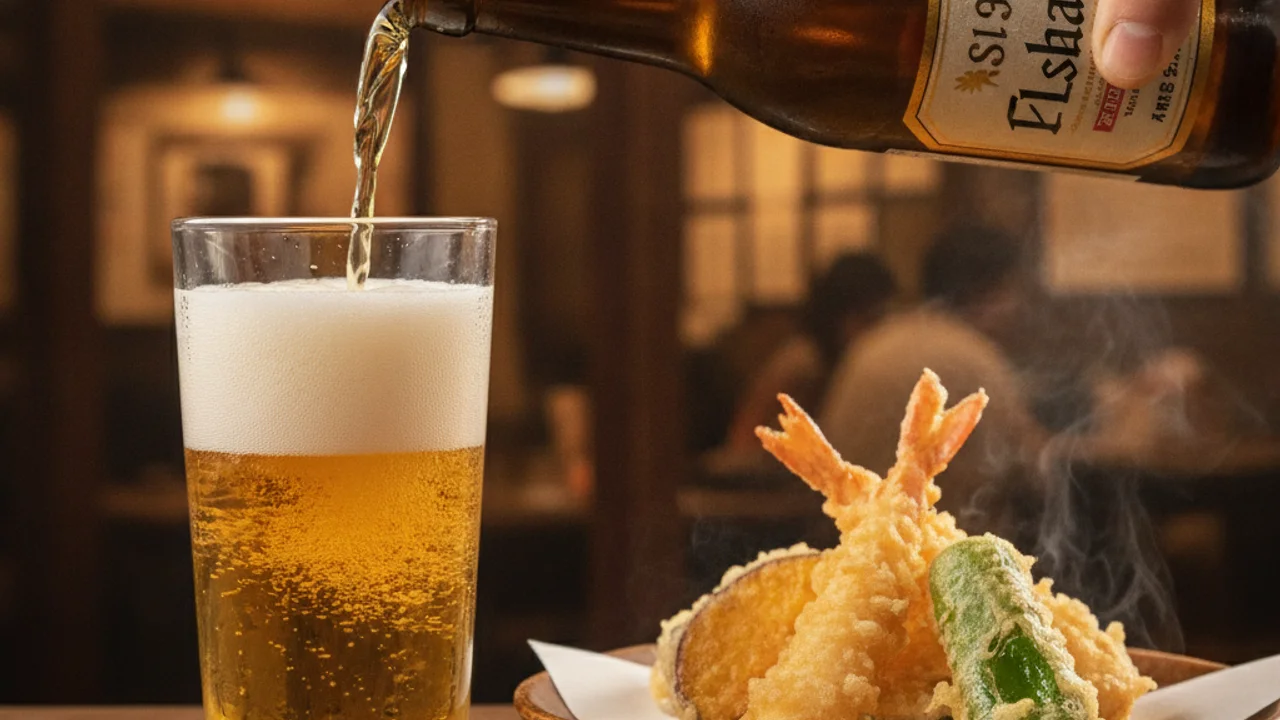
Then there is the question of richness. Several dishes in a Japanese meal are heavy: breaded tempura, crunchy karaage, flame-seared aburi where the fish is lightly torched. The beer, lively and fizzy, cuts through that fat cleanly and keeps any sense of heaviness from settling in. And the rice link, present in the beer as in the sushi, creates a quiet but very real harmony between glass and plate.
The big three: Sapporo, Asahi, Kirin
Three brands dominate the Japanese beer landscape and turn up everywhere, including in Montreal. They share that dry-lager profile, but each has its own character.
Sapporo is Japan's oldest beer brand, founded in 1876 in the city of the same name, on the island of Hokkaido. It is a clean, balanced lager with moderate bitterness and a tidy finish. Its versatility makes it an excellent starting point: it works just as well with an assortment of nigiri as with a plate of gyoza.
Asahi Super Dry, launched in 1987, reshaped the market. It popularized the karakuchi style, a word that means dry and sharp. Very dry, almost cutting, with a fast finish and little residual sugar, it kicked off the whole super dry trend in Japan. It is the ideal beer when you want maximum freshness and cut against rich dishes.
Kirin Ichiban relies on the ichiban shibori method, the first pressing of the wort. By using only that purer first run, Kirin gets a beer with a clean, smooth roundness and no aggressive bitterness. It is a touch fuller on the palate than the Asahi, while staying light and easy to drink with sushi.
Sake Guide for Beginners: Everything You Need to KnowIf beer has whetted your appetite, sake is the logical next step: how to understand it and order it.Concrete pairings, bite by bite
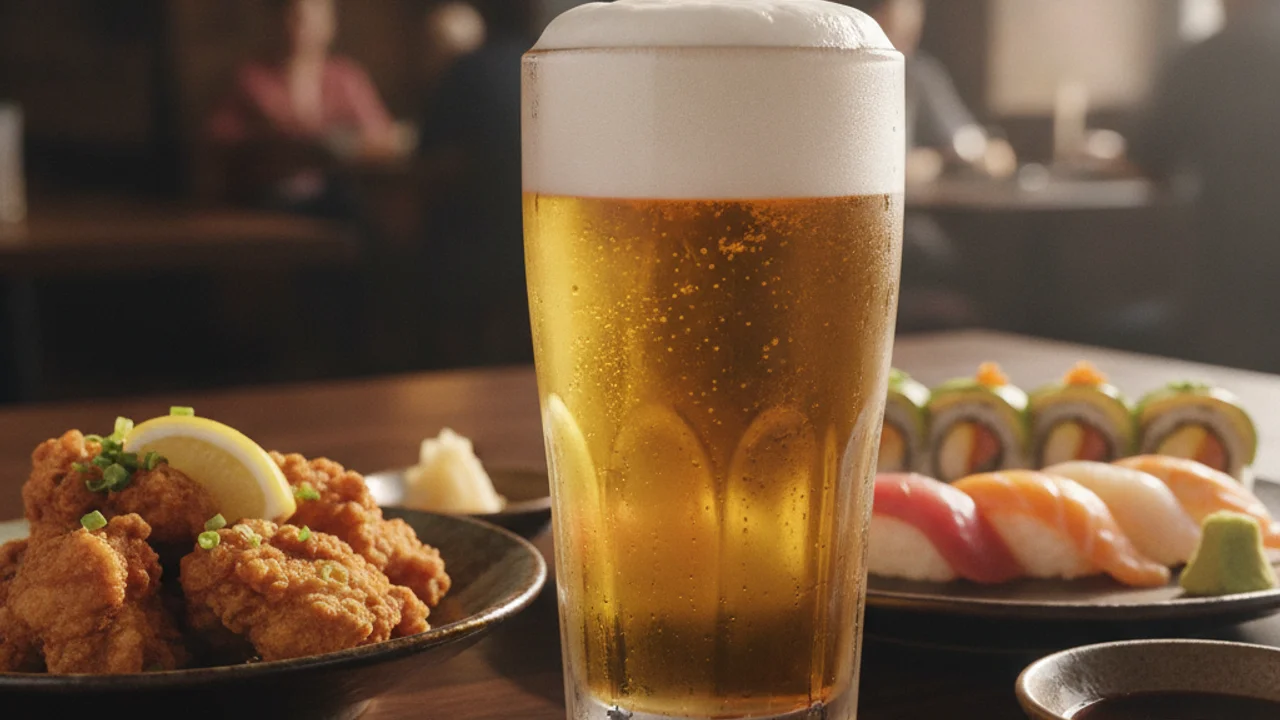
In practice, the pairing is easy to get right. With nigiri and makis, a clean lager like Sapporo lets the fish speak while keeping the palate fresh. The beer does not try to compete with the salmon or tuna: it lifts them by staying discreet.
With izakaya fried dishes, this is where the beer really shines. Karaage, tempura and pan-fried gyoza call for a very cold, dry beer: Asahi Super Dry cuts the breading and fat with precision, sip after sip. The same logic applies to fatty pieces and aburi, where the lightly torched fish benefits from being balanced by a lively, fizzy drink.
Beer also helps with heat. A slightly too generous dab of wasabi, and the chill of the lager soothes the sensation, far better than a sweet drink that would amplify it. It is a handy reflex when you are sharing platters and the wasabi doses vary from one bite to the next.
Beer or sake: which to choose
Both have their place, and the right call mostly depends on mood and dishes. Beer is lighter, fizzier and more approachable. Its bubbles and chill make it an ideal opening drink, perfect for a casual meal or for pairing with fried dishes. You pour it, you toast, you stop thinking about it: it does the job without ceremony.
Sake, on the other hand, is rounder and still. It brings out the umami of the fish more and invites you to slow down, to savor each glass for itself. Where beer refreshes and cuts, sake wraps and lingers. Many enthusiasts start their meal with beer, then move to sake for the finest pieces. Nothing stops you from alternating.
A practical tip: if you are ordering for a table, a couple of cold Japanese lagers to share at the start covers everyone, then a bottle of sake can come out once the plates of nigiri arrive. The beer keeps things easy and social while the kitchen sends out the first dishes, and the sake rewards the slower, more focused stretch of the meal.
Junmai, Ginjo, Daiginjo: Sake Types ExplainedTo go beyond beer, the classification of sake and the profile of each category.Serving and bring your own beer at Aji
A few simple gestures make all the difference. Serve the beer in a clean glass rather than drinking straight from the can: the head releases the grainy aromas and the beer feels livelier. Aim for a temperature close to 4 degrees Celsius, keep the rest of your cans cold, and enjoy the fresh bubbles while they are at their peak.
Aji is a bring-your-own-wine, sake or beer counter. So you can come with your own cans or bottles of Japanese lager and the service takes care of the rest. For a relaxed sushi meal, it is hard to do simpler than a cold Sapporo, Asahi or Kirin, brought from home, sitting next to your platter at 929 Saint-Zotique Est.
- 1Japanese lagers are dry, light and around 5 percent alcohol: a natural match for raw fish.
- 2Their bubbles cleanse the palate and cut through the richness of fried and aburi dishes.
- 3Sapporo (1876) is clean, Asahi Super Dry very dry, Kirin Ichiban round and smooth.
- 4Serve very cold, around 4 degrees Celsius, in a clean glass.
- 5Aji is BYOB: bring your cold cans of Japanese beer.
Book your table at Aji, 929 Saint-Zotique Est, and bring your favorite Japanese beer.
Book a table