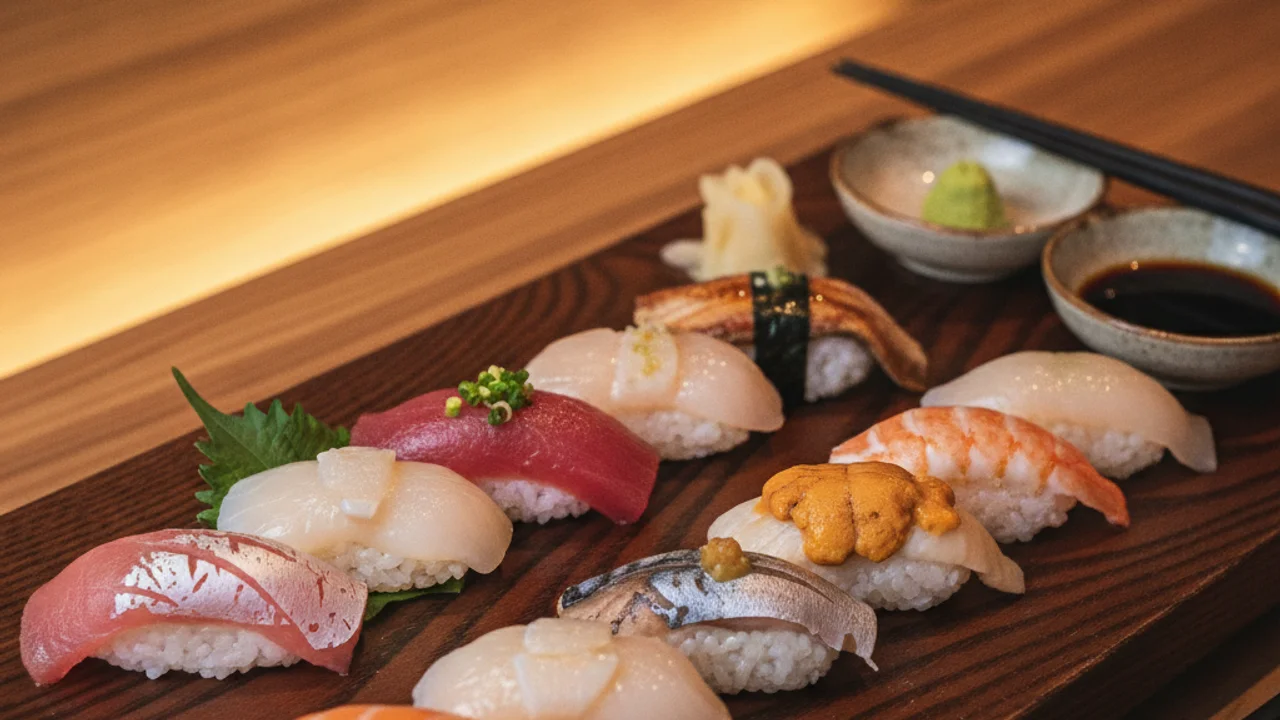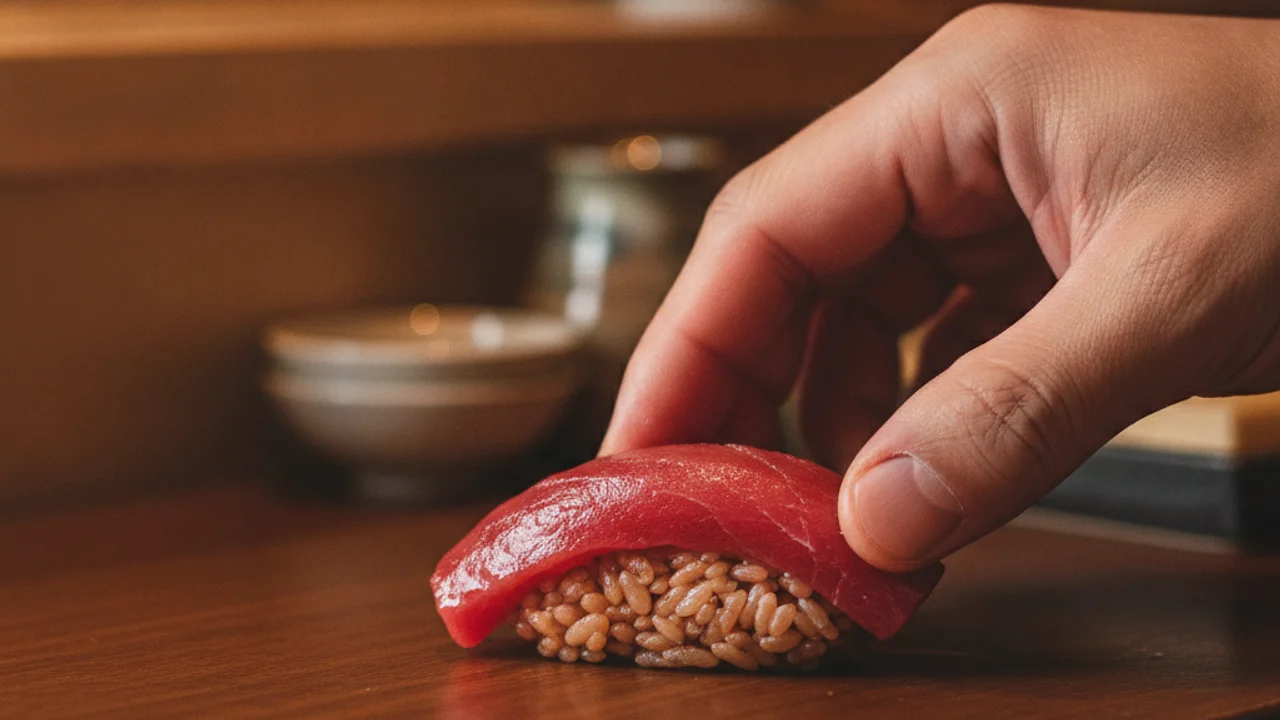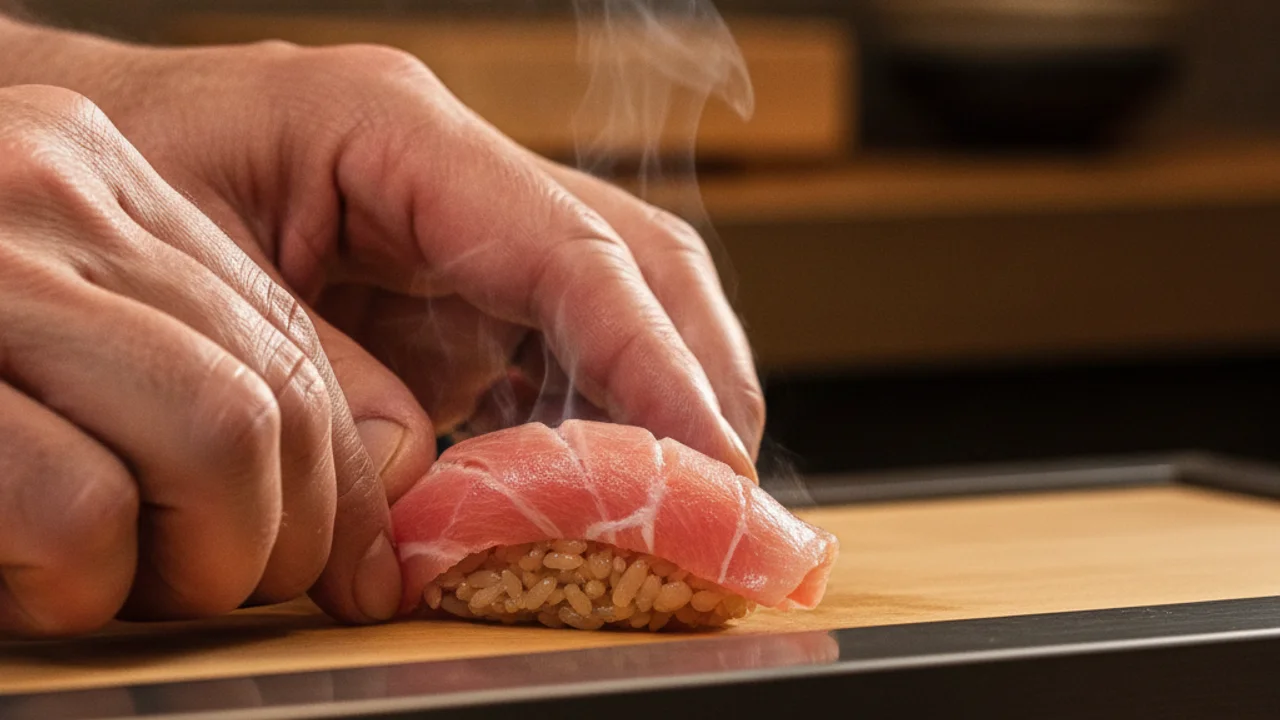
A common misconception is that sushi is a dish best served cold. However, if you've ever had the pleasure of sitting at a proper sushi counter, like the one at Aji Bar Sushi & Izakaya in Montreal, you might have noticed a surprising detail: the rice, or 'shari', beneath the fish is delicately warm. Far from being a mistake, this temperature is the hallmark of mastery and a deep respect for tradition.
So, why is this subtle warmth so crucial? It's a matter of science, history, and the quest for the perfect bite. Let's dive into the world of Edomae sushi to understand the secret that sets the great masters apart.
- Restaurant
- Aji Bar Sushi & Izakaya MTL
- Address
- 929 Saint-Zotique St E, Montreal, QC H2S 1M9
- Phone
- 514 272 2929
- Neighborhood
- Rosemont-La Petite-Patrie
- Special Feature
- Bring Your Own Wine (BYOW)
The Origin: Sushi as Fast Food in Edo
To understand the temperature of sushi rice, we have to go back to 19th-century Edo, the former name of Tokyo. Nigiri sushi as we know it was born as a quick snack sold from street stalls. Chefs would prepare the fish and form the portions to order for customers in a hurry.
In this context, the freshly cooked and seasoned rice simply didn't have time to cool down completely. It was served at what the Japanese call 'hitohada', or human skin temperature. This practice, born of necessity, turned out to be a stroke of culinary genius, and the tradition has been upheld for very specific gustatory reasons.
Edomae Sushi: A Tradition Born in Edo-Era TokyoThe Chemistry of the Perfect Bite
The temperature of the rice has a direct impact on how we perceive flavor and texture. When rice gets too cold, a process called 'starch retrogradation' occurs. The grains harden, become chewy, and their sweet, vinegary flavor profile fades. Cold rice essentially numbs the palate and masks the subtleties of the fish.
Conversely, warm rice, around 32-37°C (90-98°F), is at its peak. Its grains are tender and distinct. Most importantly, its warmth gently transfers to the slice of fish ('neta'). This slight temperature increase causes the fat in the fish to 'sweat', rendering it silkier and releasing its aromatic compounds and precious umami. It's this interaction that creates the divine sensation of sushi melting in your mouth.
A Sensory Ballet: Warm and Cool
The authentic nigiri experience is built on a harmonious contrast. The rice is warm and comforting. The fish, however, is served cool, at room temperature or slightly below, to preserve its firm texture and freshness. This opposition is entirely intentional.
When you place the sushi in your mouth, you first feel the coolness of the fish, immediately followed by the gentle warmth of the rice. It's a dance of temperatures that awakens the palate and prepares it for the fusion of flavors. Sushi served entirely cold offers a much flatter, more one-dimensional experience.
Finding True Edomae Sushi in Montreal: The Aji Bar ExperienceHow to Spot and Appreciate Real Sushi in Montreal
The next time you're at a sushi restaurant, pay attention to the rice temperature. It's a reliable indicator of the chef's expertise. At Aji Bar Sushi & Izakaya, in the Rosemont-La Petite-Patrie neighborhood, Chef Yamamoto pays meticulous attention to this detail. Each piece of nigiri is made to order and served immediately to ensure it reaches you at that ideal temperature.
It's an experience that changes how you see sushi. You begin to understand that it's not just raw fish on cold rice, but a complex composition where every element, including temperature, plays a vital role. Feel free to bring your favorite bottle to pair with your meal, as the establishment is a 'Bring Your Own Wine' (BYOW).
- 1Authentic sushi rice is served warm, not cold, a tradition from the Edomae period.
- 2The warmth of the rice prevents the starch from hardening and preserves the vinegar's flavor.
- 3Warm rice gently melts the fat in the fish, releasing a maximum of umami flavors.
- 4The contrast between warm rice and cool fish is essential to the sensory experience of nigiri.
- 5The temperature of the rice is an excellent indicator of a sushi bar's quality and authenticity.