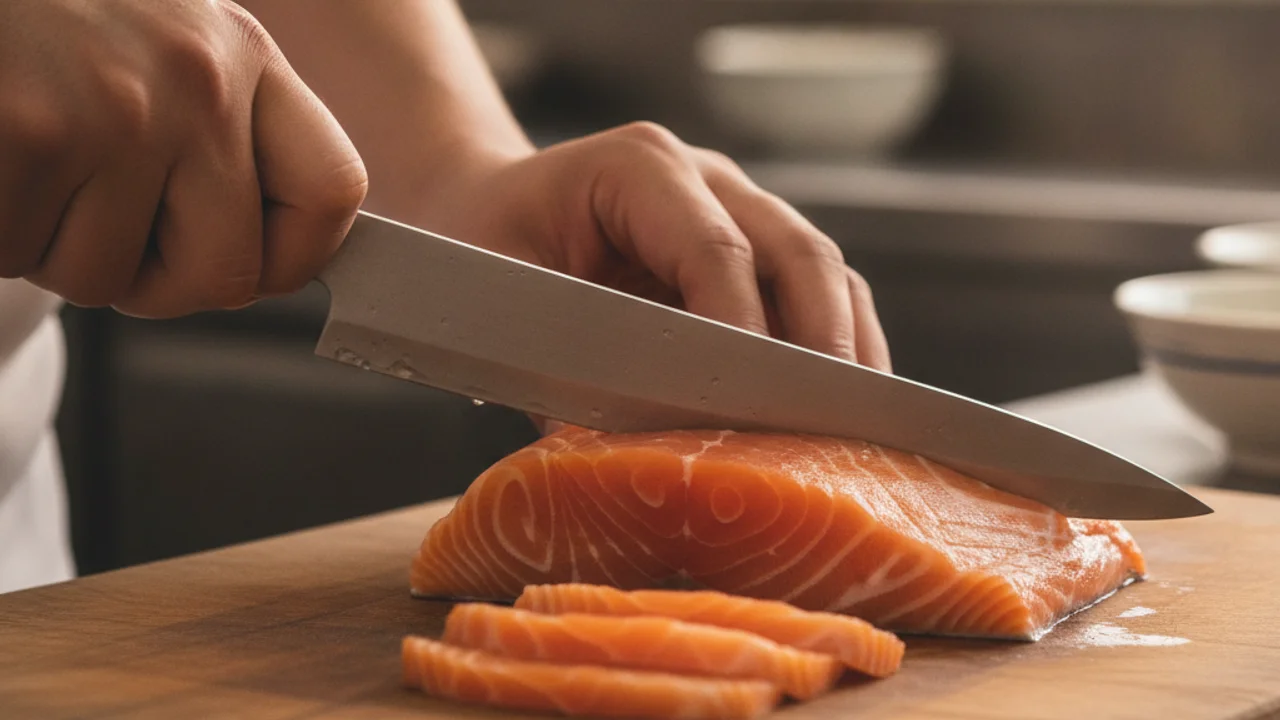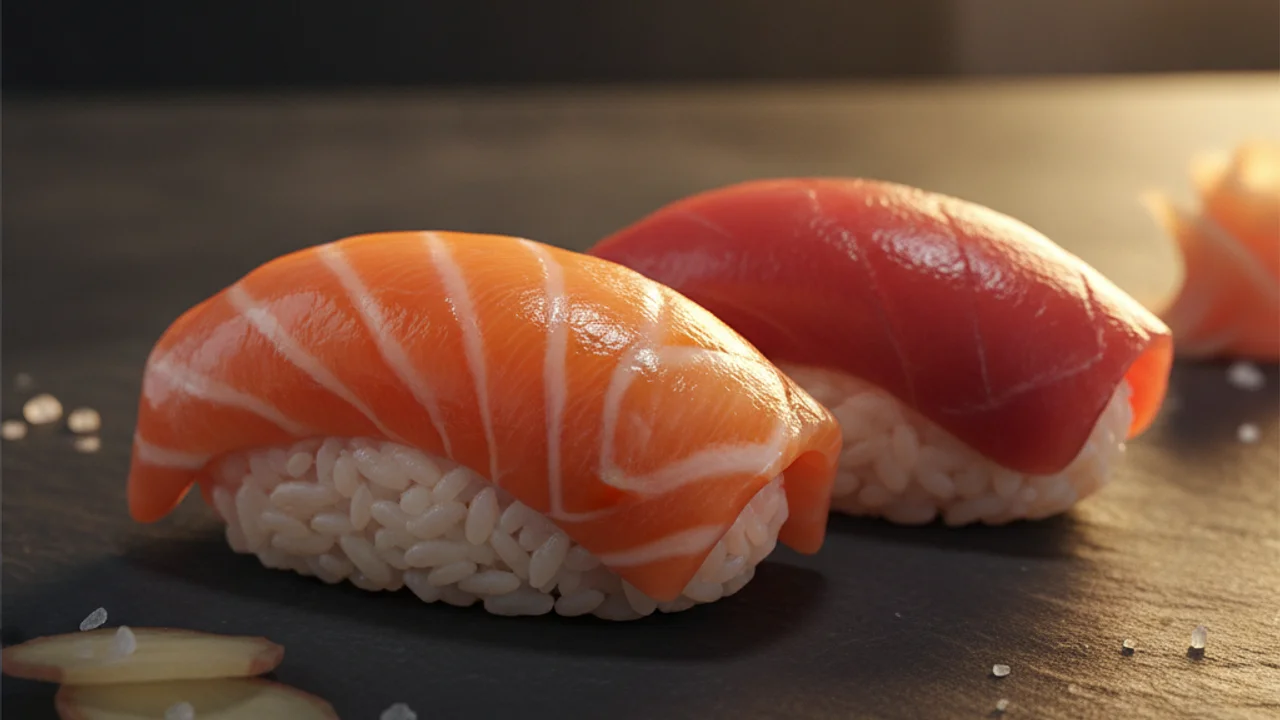
It is a question I hear often at the counter: "your salmon, is it wild?" The instinct is understandable. We tie the word wild to something nobler, purer, better. For sushi salmon, the reality is more nuanced, and the right answer runs against that instinct. The quality raw salmon that melts on a piece of nigiri is almost always farmed. And that is not a compromise: it is a considered choice, grounded in food safety and in texture.
Why sushi salmon is farmed
Historically, salmon was not even a sushi fish in Japan. Mackerel, tuna, yellowtail, yes, but not salmon, precisely because of the parasite risk in wild Pacific salmon. It was the industrial farming of Atlantic salmon, developed largely in Norway from the 1980s, that made raw salmon possible and safe. Nearly all the salmon you eat raw in sushi today descends from that supply chain.
Farmed salmon grows in a controlled environment, with managed feed and health monitoring. This gives flesh that is consistent from one fish to the next, which matters enormously to a chef: you know what to expect, the colour is steady, the fat content is high and stable. To make a clean, melting, predictable nigiri, that is a huge advantage over a wild fish whose every piece varies with the river, the month and the effort of migration.
Parasites and freezing: the real reason
At the heart of this story is a small worm: anisakis. This parasite lodges in the flesh of many wild fish, and Pacific salmon is a frequent carrier. Eating a wild fish raw and untreated means exposing yourself to that parasite. That is precisely why food safety standards regulate wild fish destined for raw service so strictly.
The rule is simple: a wild fish meant to be served raw must be frozen to precise temperature and time parameters in order to destroy parasites. That is exactly what the phrase sushi grade refers to. It is not a marketing label or a promise of freshness: in the sense of the standards, it is fish frozen by the rules so it can be safely eaten raw. Many customers believe sushi grade means ultra fresh, never frozen. It is the opposite.
Farmed salmon, by contrast, carries a much lower parasite risk. Raised in a controlled environment and fed a treated diet, it is not exposed in the same way to the parasite cycle of the wild. That is the other major reason for its dominance in the sushi market: risk reduced at the source, combined with careful handling. That said, caution still applies, and a flawless cold chain remains non negotiable, whatever the origin of the fish.
Taste, fat and texture: farmed versus wild
Beyond food safety, there is the pleasure in the mouth, and this is where fat comes in. Fat is the carrier of flavour: it is what holds the aromas and gives that characteristic melt when the fish touches the palate. A fattier salmon is not lesser, it is simply rounder, more enveloping, more forgiving on the tongue.
Farmed salmon is typically fattier. Its flesh shows a consistent orange colour, a marked melt and a mild flavour that does not overpower the rice. It is a generous fish, perfect for nigiri, where you want a bite that melts and marries with the shari without clashing. Its consistency also lets the chef calibrate cuts with precision.
Wild salmon, conversely, is leaner. Its flesh is firmer, sometimes more deeply coloured depending on the species, and its flavour more pronounced, more characterful. It is also profoundly seasonal: its quality varies with the moment of the migration and the river of origin. That character can be magnificent, but it is less predictable and less universally suited to raw service. For many cooked preparations, it is the one I would choose. For a nigiri that must melt, farmed wins more often than not.
Sustainability and origin
Choosing farmed does not excuse you from the question of sustainability, quite the opposite. Not all farms are equal. We look for responsible operations that manage density, feed and impact on the marine environment. In Canada, the Ocean Wise program and the ASC (Aquaculture Stewardship Council) certification are useful markers for telling serious production apart from unregulated industrial production.
Origin matters too. Farmed Atlantic salmon comes largely from Norway, Scotland and the Canadian east coast. Knowing the origin means better understanding what you are eating and being able to ask the right questions. A fishmonger or a chef who knows their supply chain will tell you where their salmon comes from and how it was handled. To my mind, that is the best indicator of seriousness.
Bluefin or Yellowfin Tuna: The Difference on Your PlateAs with salmon, fat and origin change everything. How to tell counter tuna apart.What we look for when buying
Whether farmed or wild, salmon destined for raw service is judged on a few simple but uncompromising criteria. Freshness first: the smell must be marine and clean, never strong or sour. The flesh must be bright, not dull or dried out, and firm to the touch, leaving no mark when pressed. The colour must be clean, with no greyish patches or pooled liquid.
Then comes traceability: knowing where the fish comes from, how it travelled, whether it was frozen to standard when required. And above all, the cold chain. Raw salmon must stay between 0 and 4 degrees from landing until the moment it is sliced. The slightest break, a fish left too long at room temperature, and the flesh degrades, the risk climbs, the melt is lost. It is on this precise point that, for me, the difference is decided between an ordinary salmon and a counter salmon.
At Aji, we do not try to settle the farmed versus wild debate as a matter of ideology. We favour quality salmon, chosen for its flesh and its freshness, and handled with a strict cold chain from start to finish. It is that discipline, more than the word on the label, that makes a salmon nigiri worth the trip.
The Seasonality of Fish in Japanese CuisineWild salmon is seasonal. The concept of shun and the best moment for each fish.- 1Nearly all salmon served raw in sushi is farmed Atlantic salmon, by choice.
- 2Wild Pacific salmon must be frozen to standard before being eaten raw, because of parasites.
- 3Sushi grade means frozen by the rules for raw service, not simply ultra fresh.
- 4Farmed salmon offers fattier, milder, more consistent flesh, ideal for nigiri; wild is leaner and seasonal.
- 5The 0 to 4 degree cold chain and traceability matter more than the farmed versus wild debate.
Next time you are served a salmon nigiri, do not only ask whether it is wild. Ask where it comes from and how it was kept cold. That is where the real answer hides.
Come taste our salmon at the counter: a strict cold chain and flesh chosen for the melt.
Book a table