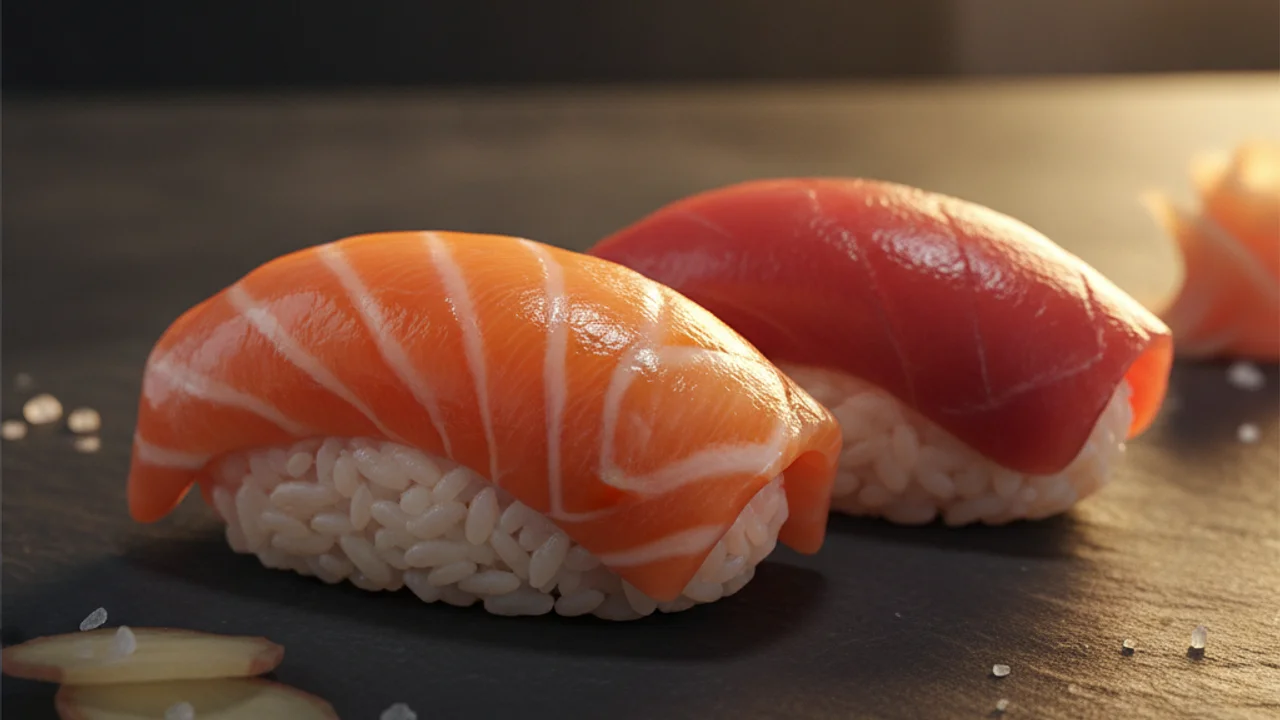
A love for sushi and respect for our oceans can, and should, go hand in hand. Wondering how to make informed choices when you sit down for a meal? It's an excellent question, and one that shows a growing awareness among fans of Japanese cuisine. At Aji Bar Sushi & Izakaya, in the Rosemont-La Petite-Patrie neighbourhood, Chef Yamamoto places the quality and origin of his products at the heart of his craft.
This guide is designed to help you navigate the world of sustainable sushi, understand the issues at stake, and identify the most responsible options, whether you're dining with us or anywhere else in Montreal.
- Address
- 929 St-Zotique Est, Montréal, QC H2S 1M9
- Phone
- 514 272 2929
- Concept
- Bring Your Own Wine (BYOB)
- Neighbourhood
- Rosemont-La Petite-Patrie
- Chef's Special
- Omakase (chef's selection)
Understanding Sustainability in Sushi
What makes a fish 'sustainable'? The concept rests on several pillars. It means sourcing seafood in a way that doesn't deplete its populations or harm the marine ecosystem. Three main factors are assessed: overfishing (is the species threatened?), bycatch (does the fishing method unnecessarily catch other animals?), and the impact of farming (does aquaculture pollute or use too many resources?).
Responsible sushi, therefore, comes from a source that is managed to ensure its longevity for future generations. This requires a deep knowledge of supply chains, which is the behind-the-scenes work that conscientious chefs undertake.
Bluefin vs. Yellowfin Tuna: What's the Difference?The Best Choices: Fish to Prioritize
Fortunately, many delicious options are also responsible. Here are a few to look for on a menu:
Mackerel (Saba): This flavourful fish grows quickly and reproduces in abundance, making it resilient to fishing pressure. Its rich, slightly pickled flavour is a classic.
Scallops (Hotate): Scallops, especially those that are farmed in suspended systems or hand-harvested by divers, have a very low environmental impact. They don't damage the seabed.
Responsibly Farmed Salmon: Not all farmed salmon is created equal. Land-based closed-containment systems, like those used for Ora King Salmon, prevent pollution and escapes. This is a top-tier alternative to conventional farmed Atlantic salmon.
Squid (Ika) and Octopus (Tako): These cephalopods have short life cycles and reproduce quickly, which generally makes them a sustainable choice, especially when caught with jigs or in pots.
Sablefish/Black Cod (Gindara): Often called 'butterfish,' sablefish from well-managed fisheries in Alaska and British Columbia is a certified sustainable choice.
Fish to Avoid or Consume with Great Caution
Some species are victims of their own popularity, and their stocks are now in peril. It's best to avoid them to allow their populations to recover.
Bluefin Tuna (Hon Maguro/Otoro/Chutoro): This is the poster child for overfishing. Both Atlantic and Pacific bluefin tuna are severely threatened. While some farmed options exist, their ecological footprint is often questionable. Line-caught Yellowfin (Ahi) is a better alternative.
Freshwater Eel (Unagi): Japanese eel is critically endangered. Nearly all unagi served comes from catching wild baby eels (glass eels) and raising them in captivity, which depletes wild stocks.
Yellowtail (Hamachi/Buri): The majority of hamachi comes from open-net pen farms in Japan, where practices can be problematic (pollution, disease). More sustainable alternatives exist, but they are rare.
Farmed or Wild Salmon for Sushi: Which Is Best?The Role of Certifications: Ocean Wise and Other Labels
To help navigate these choices, certification programs can guide consumers and restaurateurs. The best-known in Canada is Ocean Wise. An Ocean Wise logo next to a menu item means the option has been deemed sustainable by the organization based on strict scientific criteria. It's a reliable shortcut.
Another international label is the Marine Stewardship Council (MSC), recognizable by its blue checkmark logo. It certifies wild fisheries that adhere to the best sustainability practices. Even if a restaurant isn't an official partner, a good chef will be able to tell you if they work with MSC-certified suppliers or follow Ocean Wise standards.
How to Choose Wisely at a Restaurant
Your greatest asset in a restaurant is your curiosity. Never hesitate to ask questions. A passionate and transparent chef will always be happy to talk about their products. Simply ask, 'Where is this fish from?' or 'What are your most sustainable options tonight?'.
Trusting the chef is also an excellent strategy. The Omakase option, where the chef prepares a selection of their best products of the day, is often an opportunity to discover delicious and sustainable fish you might not have chosen yourself. At our counter on St-Zotique East, it's a format we particularly cherish, as it allows us to share the best of the sea, responsibly.
- 1Prioritize small fish and bivalves like mackerel, sardines, and scallops.
- 2Avoid overfished species like bluefin tuna and freshwater eel (unagi).
- 3Rely on certifications like Ocean Wise and MSC to make informed choices.
- 4Don't hesitate to ask your sushi chef about the origin of their products; it's a sign of quality.
- 5Trusting an engaged chef's Omakase is often the best way to enjoy sustainable sushi.