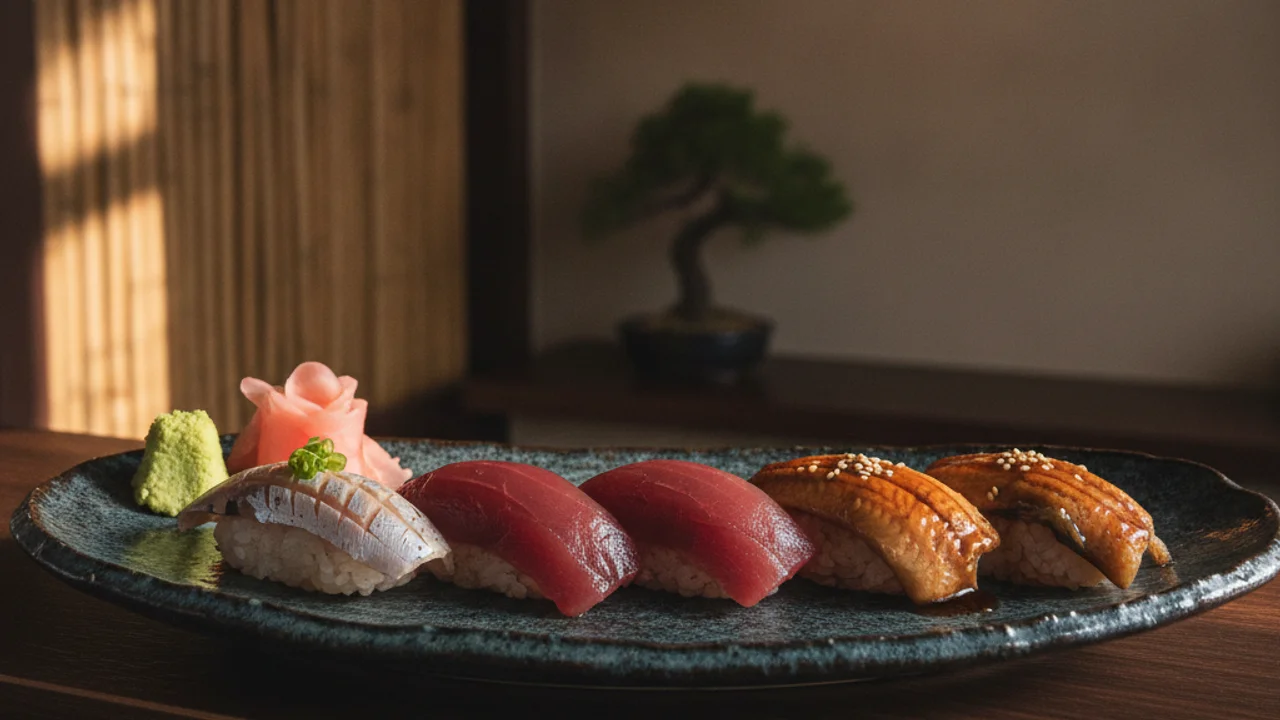
When most people think of sushi, they picture colorful rolls or a simple slice of fresh, raw fish on a bed of rice. While delicious, that's only one part of a much larger world. There is an older, more subtle, and deeply historical form: Edomae sushi.
It's a tradition we cherish at Aji Bar Sushi & Izakaya here in Montreal. Far from being just a recipe, it's a philosophy. Let's dive into what makes Edomae sushi so special and different from everything you thought you knew.
- Restaurant
- Aji Bar Sushi & Izakaya MTL
- Address
- 929 St-Zotique Est, Montréal, QC H2S 1M9
- Phone
- 514 272 2929
- Specialty
- BYOB (Bring Your Own Wine)
- Signature Experience
- Omakase (Chef's Tasting Menu)
What Exactly Is Edomae Sushi?
The name itself gives us a clue. 'Edo' is the former name for Tokyo, and 'mae' means 'in front of' or 'bay.' Edomae sushi, therefore, literally means 'sushi from the Tokyo bay.' It was born in the early 19th century, a time without refrigerators or rapid transit. Chefs had to be clever to preserve the fish caught fresh from the bay.
This wasn't a luxury dish; it was the city's original fast food. Chefs would serve these bites from street stalls, offering a quick, tasty, and satisfying meal to workers. The necessity of preserving fish gave rise to a range of techniques that now define this culinary art form.
Edomae Sushi: A Tradition Born in Edo-Era TokyoThe Art of Curing: More Than Just Raw Fish
The main distinction of the Edomae style is that the fish is rarely served completely raw. Each catch is meticulously prepared to enhance its flavor and preserve its quality. These techniques are the heart of the chef's craft.
Among the most common methods are:
'Zuke': Fish, often tuna, is marinated in a mixture of soy sauce, sake, and mirin. This not only preserves the fish but also imbues it with a deep umami flavor.
'Shime': This technique involves salting and then pickling the fish in vinegar. It's typically used for strong, silver-skinned fish like mackerel (saba) or gizzard shad (kohada). The vinegar tenderizes the flesh and balances the flavor.
'Nitsume': Certain ingredients, like sea eel (anago), are gently simmered in a sweet and savory broth until incredibly tender. A glaze of this same reduced sauce is then brushed on just before serving.
'Kobujime': White fish is sandwiched between sheets of kombu seaweed. The kelp draws out excess moisture from the fish while transferring its savory, umami notes.
Shari: The Soul of the Nigiri
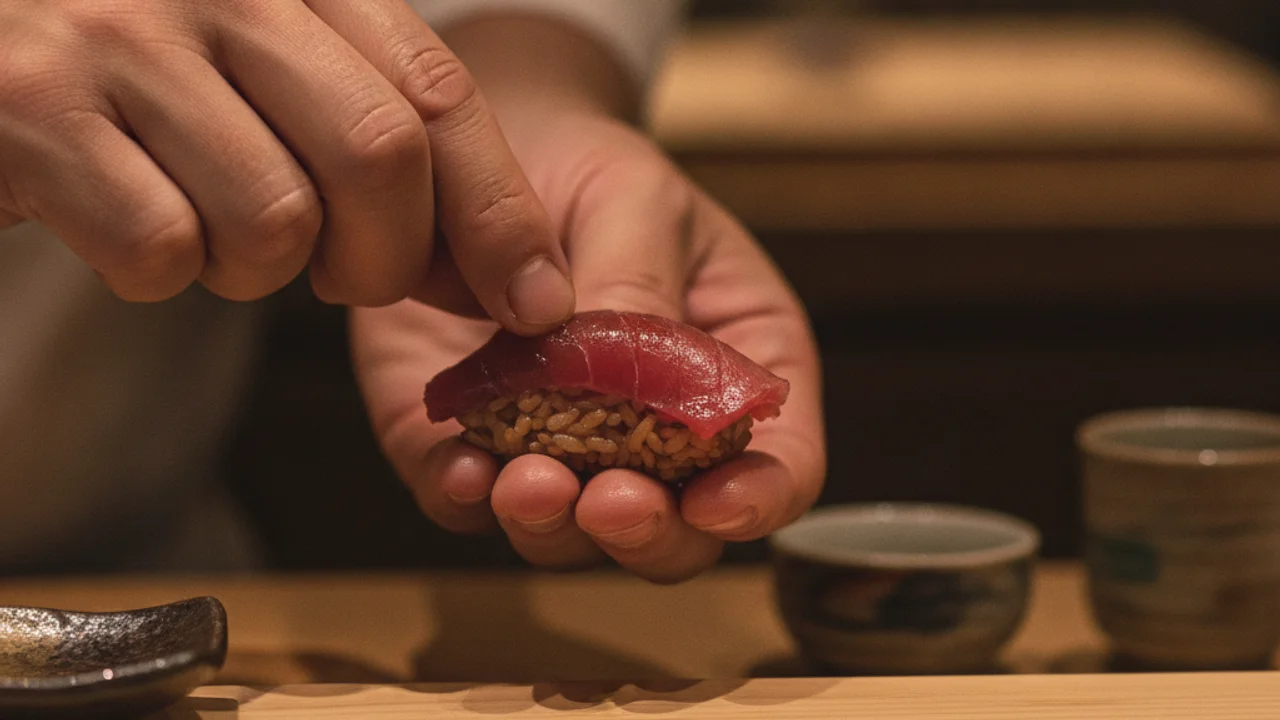
In Edomae sushi, the rice (called 'shari') is just as important as the fish, if not more so. It's considered the foundation of the flavor. Unlike the often-cold rice in modern sushi, Edomae shari is served at body temperature.
Its seasoning is also more assertive. Traditionally, it's made with red rice vinegar ('akazu'), which is derived from sake lees. This vinegar gives the rice a slight brown hue and a more complex, mellow flavor than white vinegar. The combination of warm rice and prepared fish creates a harmony of flavors and textures that melts in your mouth.
Fish Aging in Japanese Cuisine: Why It MattersEdomae vs. Modern Sushi: The Key Differences
To sum it up, here are the main distinctions:
Fish: Edomae focuses on curing and aging to develop umami. Modern sushi emphasizes the raw freshness of the fish.
Rice: Edomae rice is warm, seasoned with red vinegar, and more flavorful. Modern rice is often white, sweeter, and served cool.
Presentation: The Edomae style favors the simplicity of nigiri, where each piece is prepared individually and often seasoned by the chef. Modern sushi includes a wide variety of rolls (maki) with multiple ingredients and sauces.
Soy Sauce: In an Edomae restaurant, the chef applies the perfect amount of sauce to the sushi before serving it to you. It's often considered poor form to dip the sushi in soy sauce yourself.
The Edomae Experience at Aji Bar in Montreal
At our counter at 929 St-Zotique East, Chef Yamamoto and his team strive to bring this tradition to life. The 'Omakase' experience, which means 'I'll leave it up to you,' is the best way to discover Edomae sushi. You let the chef guide you through a sequence of freshly prepared bites, each one showcasing a different technique and product.
And since our restaurant is a 'Bring Your Own Wine' (BYOB), you have the freedom to pair this unique tasting with your favorite bottle, whether it's a delicate sake or a crisp white wine that will beautifully complement the complexity of the flavors. It's an invitation to slow down and savor every moment.
- 1Edomae sushi is a Tokyo tradition born before the age of refrigeration.
- 2It uses preservation techniques (marinating, salting, simmering) to enhance flavor.
- 3The rice ('shari') is just as crucial, served warm and seasoned with red vinegar.
- 4The focus is on nigiri and the balance of flavors, as determined by the chef.
- 5The Omakase experience is the ideal way to discover this culinary art form.